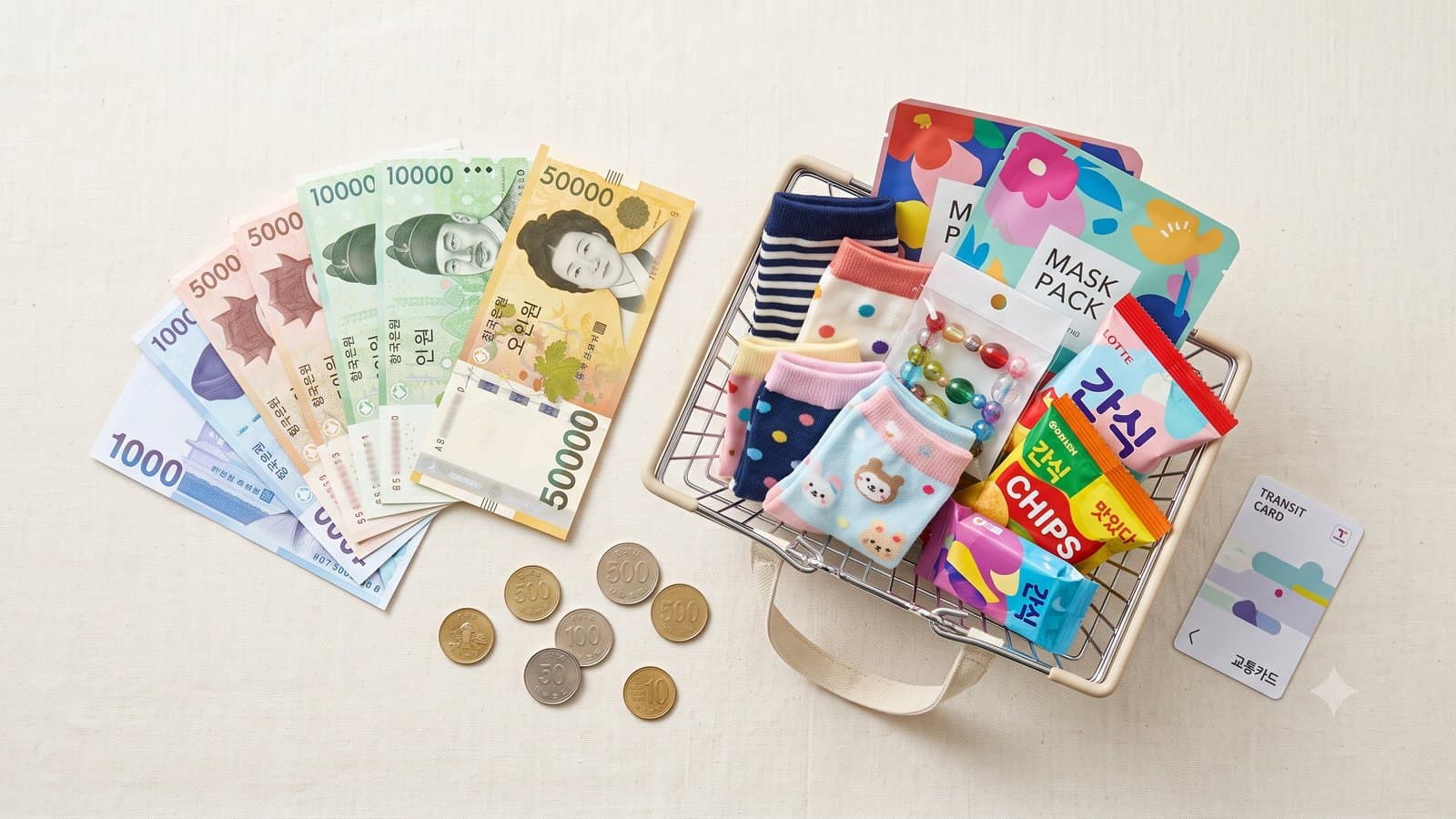
Ask a Korean where to buy a phone stand, a kitchen strainer, a plant pot, gift wrap, slippers, or a travel bottle set, and you will get the same one-word answer every time: Daiso (다이소). The chain has roughly 1,500 stores across the country, and it operates on a rule that sounds impossible until you walk an aisle: nothing costs more than ₩5,000 (about $4), with most items at ₩1,000–3,000, on fixed price tiers that start at ₩500.
It's easy to file Daiso under "dollar store" and move on. That would be a mistake — in Korea, Daiso is closer to national infrastructure, and for a visitor it's simultaneously the best souvenir shop, travel-emergency kit, and cultural exhibit in any neighborhood.
First, the fact that surprises everyone
Despite the Japanese-sounding name, Daiso Korea is a fully Korean company. It began as a Korean housewares chain (originally "Asco Eventhall") run by Asung, took Japanese investment and the Daiso name in the early 2000s — and in December 2023, its Korean parent bought out the Japanese partner's entire 34% stake, reportedly for around ₩500 billion, ending the capital relationship completely. Korean Daiso and Japanese Daiso now share history, not ownership: the product lines, sourcing, and strategy are run from Korea.
That backstory matters beyond trivia — the buyout was national news precisely because Daiso had become too central to Korean daily life to be thought of as a foreign brand.
How ₩5,000 stays the ceiling
The model is discipline: fixed price points (₩500 / 1,000 / 1,500 / 2,000 / 3,000 / 5,000), enormous volume across thousands of suppliers, minimal packaging, and no in-store frills. Rather than marking each product up to what it could fetch, Daiso designs products down to hit a price tier. The result is a store where checking the price tag is pointless — the question is never "how much?" but "which tier?"
Two honest caveats that keep this article truthful: quality is engineered to the price, so durability varies by category (glassware and stationery punch far above their price; some electronics accessories are exactly what they cost). And per-unit, supermarkets sometimes beat Daiso on consumables. Koreans know this — Daiso's job is good enough, right now, for almost nothing.
What's actually worth buying
- Kitchen & living: the legendary aisle. Storage containers, silicone tools, dish brushes, drain nets — the "Korean household starter pack" lives here.
- Stationery: pens, stickers, notebooks, and desk organizers that rival dedicated stationery stores at a third of the price.
- Travel gear: packing cubes, bottle sets, neck pillows, universal adapters — if you forgot it at home, Daiso has it for pocket change.
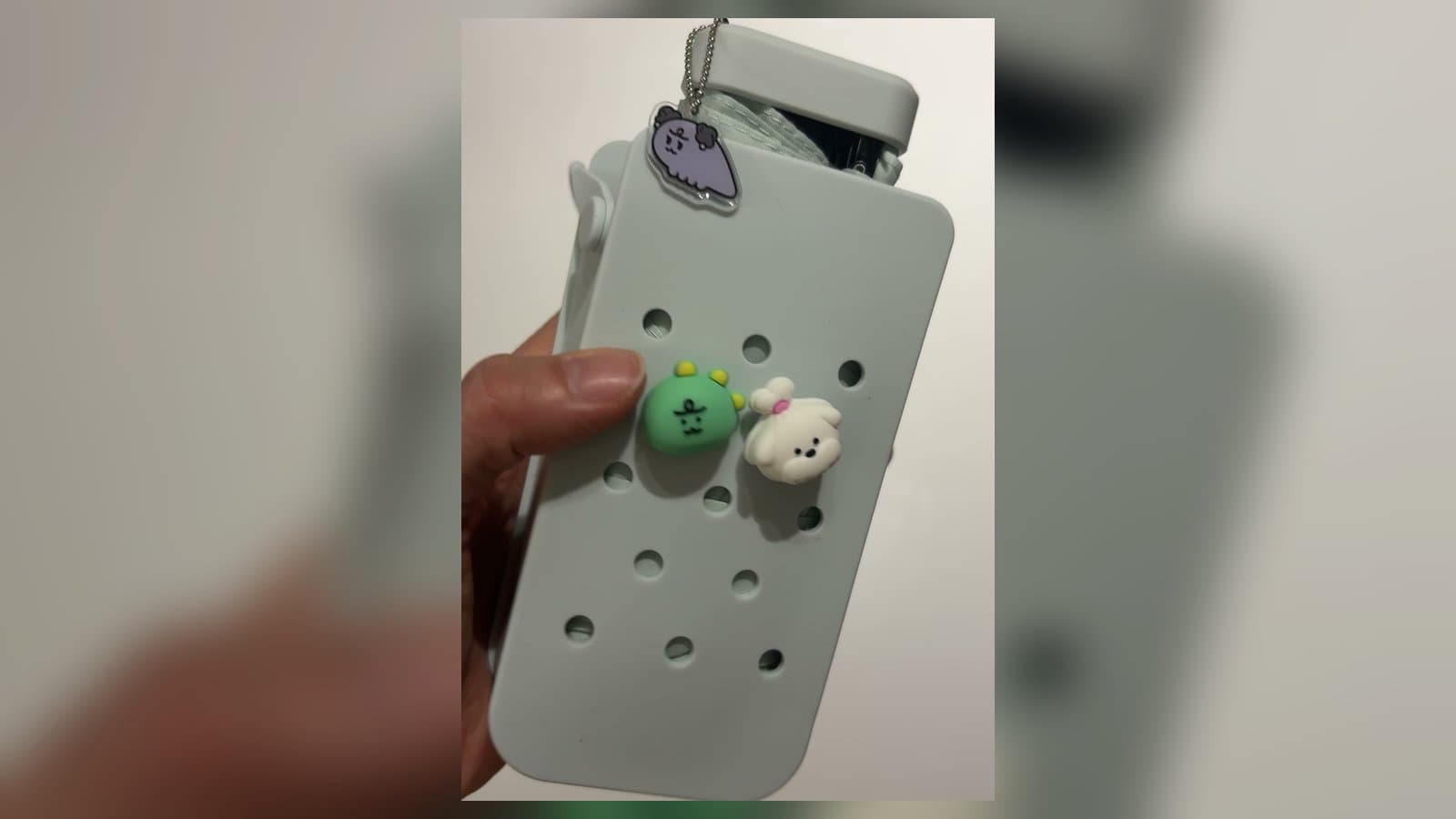
- Phone accessories: cases, cables, stands, grips. First stop before any official brand store.
- Seasonal: Korea's holidays arrive at Daiso first — from Lunar New Year gift wrap to summer cooling gear to genuinely charming Christmas decor.
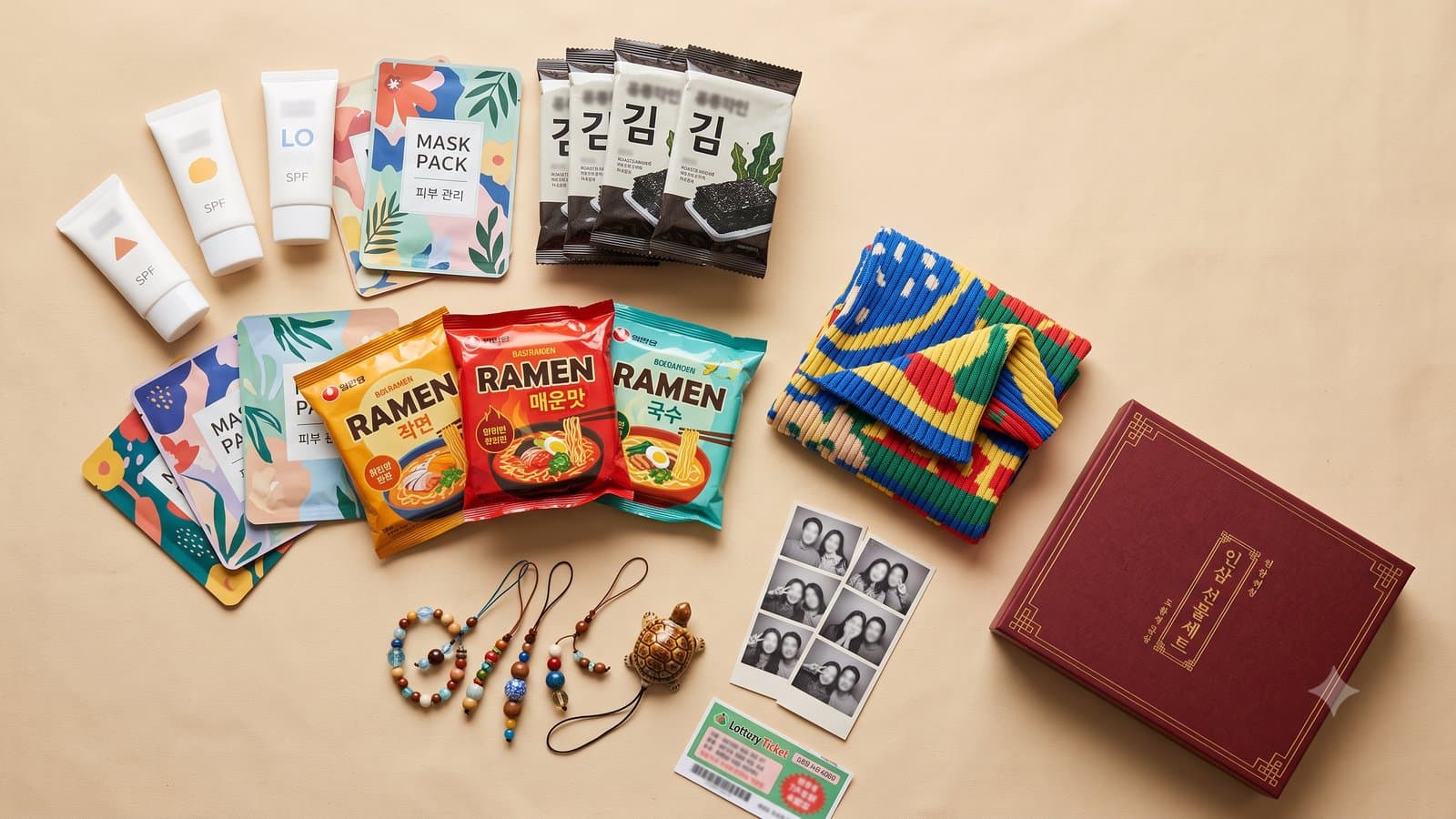
- Snacks & tea: a compact but real grocery corner, good for cheap edible souvenirs.
The beauty aisle that shook the industry
The single most-watched shelf in Daiso is cosmetics. Over the past few years Daiso became K-beauty's budget battleground: established brands now launch sub-lines and mini formats there to hit the ₩3,000–5,000 tiers, and viral sellouts — serums, color balms hyped as luxury dupes, sheet masks — have become a recurring Korean news genre. For teens, Daiso is the default first beauty store; for tourists, it's the cheapest legitimate K-beauty haul possible (we covered the mask angle in our sheet-mask guide).
Manage expectations honestly: these are real, regulated Korean cosmetics — often made by reputable manufacturers — but they're entry formulations at entry prices, not secret luxury products. The fun is in how good "good enough" has gotten.
Visitor's playbook
- Flagships: the multi-floor giant near Myeongdong Station is the tourist-famous one — an entire building of ₩5,000-and-under, and honestly a better "modern Korea" museum than some museums. Big stores also anchor Hongdae, Gangnam, and most major districts.
- Souvenir strategy: Korean-designed stationery, chopstick sets, ceramic bowls, socks, and seasonal knickknacks make better (and cheaper) gifts than airport merchandise.
- Payment & tax: cards work everywhere; prices are so low that tax refunds mostly don't apply — just don't overthink it.
- When: weekday mornings are calm; weekends are a national pastime in progress.
- Online: Daiso runs its own mall and same-day-ish delivery in Korea, but the store walk is the point.
Why it matters
Daiso is what happens when extreme price discipline meets Korean retail intensity: a store that removed price anxiety from an entire country's daily shopping. It's also a quiet counterweight to the luxury-obsessed image of Korean consumer culture — the same shoppers carrying department-store bags restock their kitchens at ₩2,000 a piece and feel clever doing it. Visit once for the souvenirs; you'll go back because it recalibrates your sense of what things should cost.
This article is independent editorial by Seoul Glow — no affiliation with Daiso. Ownership and store figures reflect Korean media reporting as of 2025–2026; product line-ups change constantly.