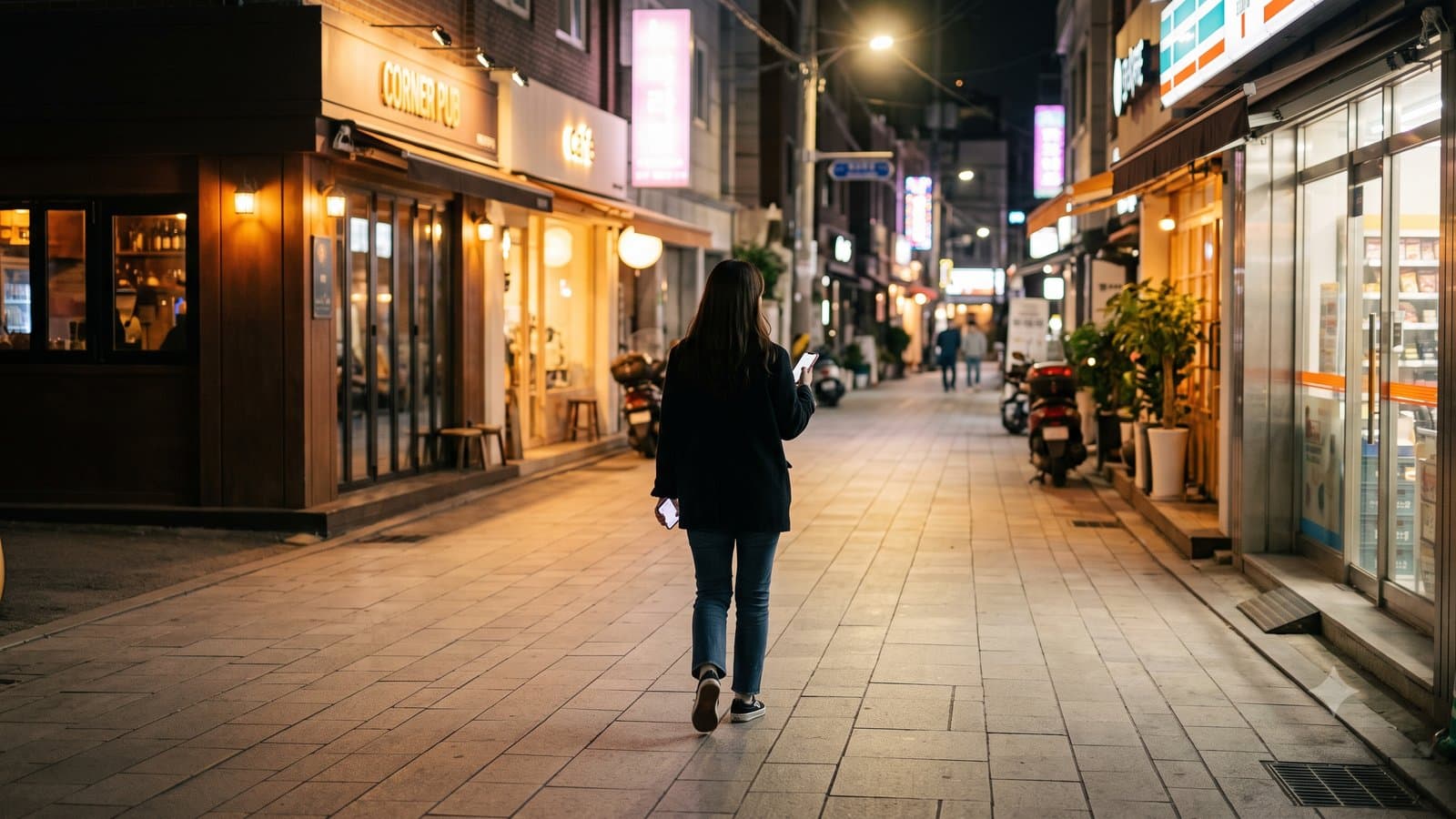
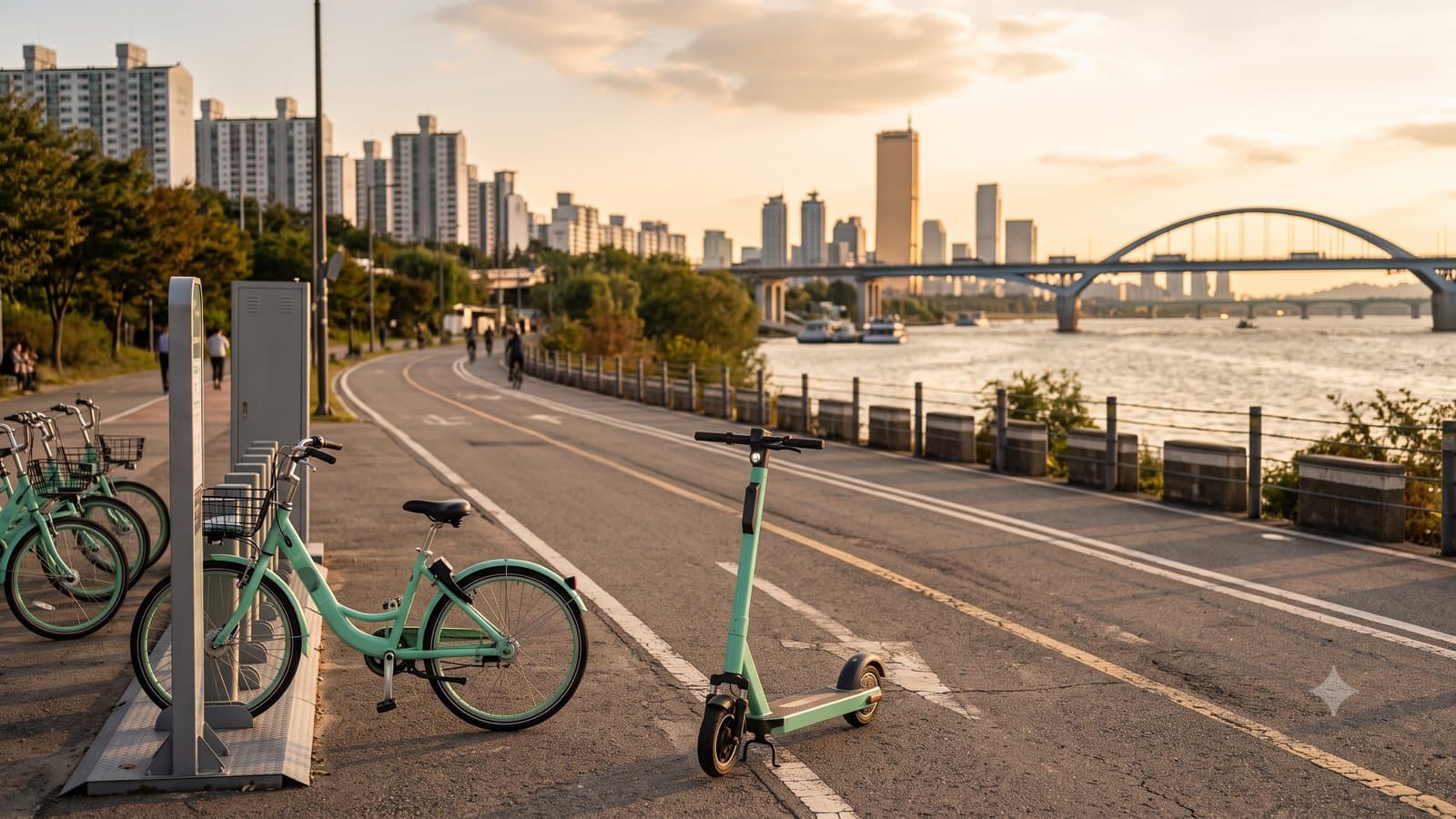
Ask Seoulites where they actually hang out on a summer evening and the answer usually isn't a bar district — it's the Han River (한강, Hangang). The river cuts the city in half, and the long ribbon of public parks along its banks functions as Seoul's collective backyard: picnic mats to the horizon, delivery scooters idling at the park entrances, someone's portable speaker, and the skyline turning on across the water.
What makes it worth writing a guide about is that the Han River picnic isn't just "sitting on grass." It's a system, with its own infrastructure, rituals, and unwritten menu — and once you know how it works, it's one of the best cheap evenings in any major city on earth.
The core rituals
Delivery chicken, to the grass. Korea's delivery culture doesn't stop at buildings. Order fried chicken (or pizza, or jokbal) through a delivery app, set your drop point to a park landmark — entrances and marked zones work as pickup spots — and walk over when the driver calls. Watching a delivery scooter arrive with your chimaek while you sit on a mat by the water is a genuinely surreal first-time experience. It works because the parks are mapped into the delivery ecosystem — this is normal, not a hack.
The ramen machine. Han River convenience stores are famous for one thing above all: instant-ramen cooking machines. Buy a packet of ramen inside, drop it in the machine, and it boils it to timer-perfect doneness in its aluminum tray. "Hangang ramyeon" is a minor institution — Koreans will tell you, with complete sincerity, that ramen simply tastes better by the river, and the machines have queues on summer nights to prove it.
The mat (dotjari, 돗자리). The foundational equipment. Sold cheaply at the same convenience stores if you don't bring one. Pop-up shade tents are common too — note that parks regulate them (designated zones, daytime hours, sides open), so follow the posted signage rather than the boldest tent you can see.
Everything else: bike and duck-boat rentals, busking, night markets in season, and the simple core activity — sitting with snacks while the city glows. Alcohol in the parks is currently a legal gray-to-tolerated zone that Koreans navigate with basic discretion; a couple of beers with chicken is standard picnic fare, being the loud group at midnight is not.
Which park, which vibe
The riverbanks are organized into a chain of parks, each with its own personality:
- Yeouido (여의도) — The flagship and the busiest: skyline views, spring cherry blossoms, the classic first-timer choice. Closest to the postcard.
- Banpo (반포) — Home of the Moonlight Rainbow Fountain, the bridge-mounted fountain show that runs on a schedule in the warm months. Nighttime crowd, date-night energy.
- Ttukseom (뚝섬) — East-side favorite with a younger, more local feel and good sports facilities.
- Mangwon (망원) — West-side, quieter, beloved by the nearby Mangwon neighborhood crowd; pairs perfectly with a stop at Mangwon Market for picnic supplies.
- Nanji, Ichon, Jamsil and others — each with local loyalists; part of the fun is that every Seoulite will defend their home park.
All are reachable by subway; stations with "Hangang Park" area exits are marked on maps, and Yeouinaru Station (Line 5) delivers you practically onto the Yeouido grass.
The visitor's playbook
- Go an hour before sunset. You get daylight for setup, golden hour for the view, and the skyline lighting up as the main event.
- Convenience store first: mat, snacks, drinks, and the ramen-machine experience. Then order delivery for the main course once you've claimed your spot.
- Delivery without a Korean app: the big apps need some setup for foreigners — if that's a wall, the convenience stores plus street vendors cover you completely. (Some parks also have seasonal food trucks and night-market stalls.)
- Summer specifics: bring mosquito repellent, and check the weather — monsoon-season rain empties the parks fast. After heavy rain, lower paths can be closed for flooding; the parks post it clearly.
- Leave no trace, Korean-style: recycling and trash stations sit near exits — the mat-to-bin walk at the end of the night is part of the ritual.
Why it works
Cities everywhere have riverfronts; almost none of them have this. The Han River picnic works because Seoul treats its riverbanks as infrastructure for ordinary joy — free to enter, open late, food-supplied, transit-connected, and equally available to families, couples, students, and one person with a ramen tray watching the water. Not every Seoulite is a regular, and winter empties the grass — but on a warm Friday night, the river is the most democratic social space in the city.
It's also the cheapest possible answer to "where can I feel what living in Seoul is actually like?" — about the cost of a chicken and a mat.
This article is independent editorial by Seoul Glow. Park rules (tents, hours, events) and fountain schedules change seasonally — check official Hangang Park channels for current details before you go.