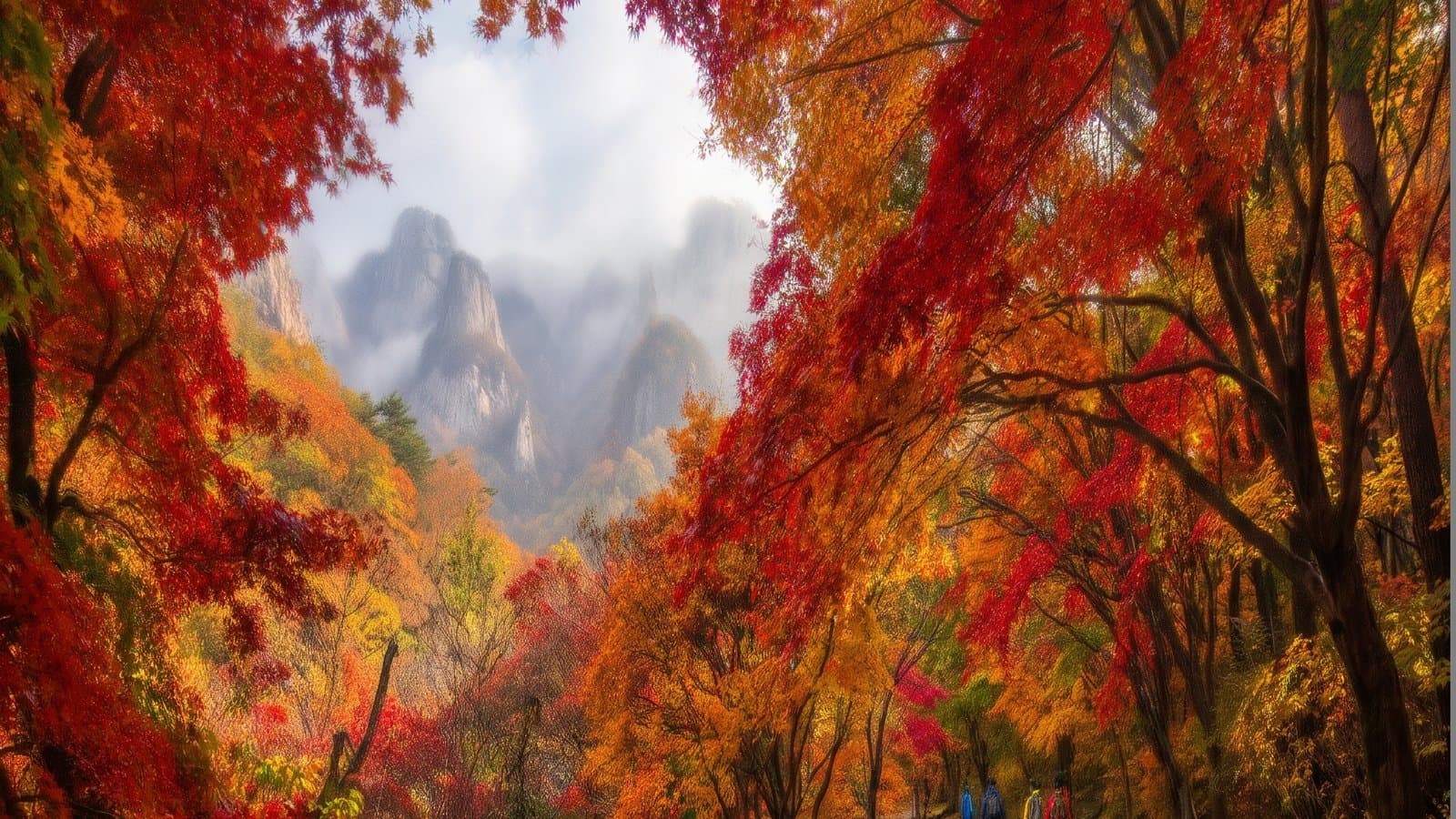
Korean has a dedicated word for what happens every October: danpung-nori (단풍놀이) — "foliage play," the act of going somewhere specifically to stand under red maples. It's practically a national sport, and it runs on one elegant fact: fall color in Korea is a wave. It ignites in the high northern mountains and rolls south for three weeks, which means there is no single "best week" — there's a schedule, and you can surf it.
Here is the 2026 schedule, region by region — with one big caveat up front: the Korea Forest Service's official 2026 forecast says this year's color is running 8–9 days later than normal thanks to the warm autumn. If you're planning around dates from old blog posts, shift everything back a week.
The wave, in one paragraph
Color starts where it's coldest: the high peaks of Seoraksan in the northeast, forecast to peak around October 20 this year. It sweeps through the central mountains in late October (Songnisan around October 28), hits the famous southern maple mountains in early November (Naejangsan around November 4), and finishes on Jeju's Hallasan around November 6. City trees lag the mountains: ginkgos peak around October 30, maples and oaks around October 31 in the lowlands. Plan north-and-high early, south-and-low late.
Stage 1 — Mid-to-late October: Seoraksan and the northeast
Seoraksan is Korea's foliage overture and its most dramatic stage: granite spires above burning valleys, a cable car to Gwongeumseong fortress for the no-hiking version, and the classic Cheonbuldong Valley trail for the full pilgrimage. Peak forecast: around October 20. Base yourself in Sokcho — seafood market included — and go on a weekday if humanly possible; foliage weekends here are Korea's version of playoff traffic.
Nearby alternates: Odaesan and the high passes of Gangwon province turn on the same clock, with a fraction of the crowd.
Stage 2 — Late October: the central mountains and Seoul's streets
- Songnisan (peak ~Oct 28) and Worak/Chiak carry the wave through the center — temple-plus-maples territory; Beopjusa at Songnisan is the postcard.
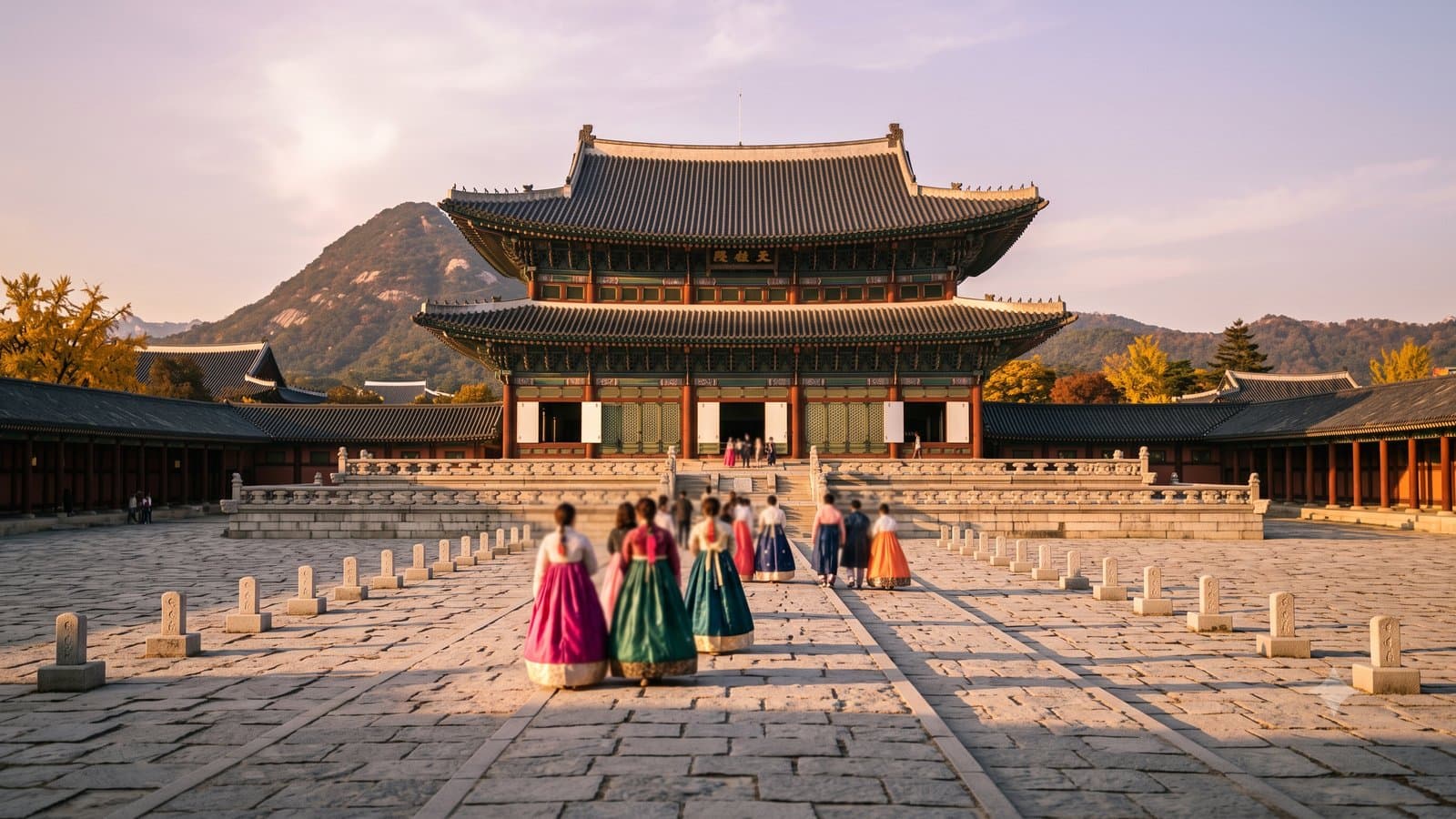
- Seoul itself is a legitimate foliage destination in the last days of October: the ginkgo avenues go gold around the 30th — Deoksugung's stone-wall road is the iconic walk — and the palaces stack red maples against dark tile roofs. Gyeongbokgung in hanbok during ginkgo week is peak-Korea photography; Changdeokgung's Secret Garden is the connoisseur ticket (reserve ahead).
- Nami Island and Gapyeong — the tree-tunnel island of K-drama fame plus the Garden of Morning Calm, an easy day trip east of Seoul, best very late October into early November.
Stage 3 — Early November: the southern maple cathedrals
- Naejangsan (peak forecast November 4) is Korea's single most famous maple mountain — the entrance is a kilometer-long maple tunnel that turns into a red corridor, and the name loosely means "hidden treasure inside." It earns the hype and the crowds; arrive at opening time.
- Jirisan's valleys (Piagol is the celebrated one) run the same window with wilder scenery, and Gyeongju pairs late-season color with ancient tombs and pagodas — foliage plus a history trip in one KTX itinerary.
Stage 4 — The finale: Jeju
Hallasan closes the season around November 6 — crater-rim trails over fields of silver eulalia grass (eoseungsaengak is the gentle option), plus Jeju's low-season flight prices as a bonus. When Hallasan browns out, Korea's autumn officially ends and everyone starts talking about first snow.
Danpung-nori like a local
- Weekdays > weekends, always — the famous mountains on October Saturdays are queue simulators.
- Dress in layers: mountain mornings run near freezing while afternoons hit 18°C; this is convenience-store hot-drink season.
- The mountain meal is ritual: pajeon and makgeolli at the trailhead village on the way down — foliage tax, gladly paid (drinking culture primer).
- Check color status before committing: the forest service updates actual conditions through the season, and "30% colored" versus "peak" is the difference between a photo and a shrug. Peak lasts roughly a week per location.
- Cities are the safety net: if you mistime the mountains, late-October Seoul ginkgo streets are undefeatable and require zero hiking.
Peak dates are the Korea Forest Service's 2026 forecasts via cited reporting as of late September 2026 — actual color shifts with weather, so verify conditions before traveling. Now go play in the leaves; it's the official national instruction.