The Korean convenience store is not a place you grab a sad sandwich. GS25, CU, and 7-Eleven Korea operate more like open-source cafeterias: hot water dispensers, microwaves, eat-in counters, and thousands of components that customers — above all, students — assemble into recipes. There's even a word for the practice: kkul-johap (꿀조합, "honey combination"), the art of combining store items into something better than the sum of its parts.
If you visit Korea, doing this once is as essential as a palace visit. Here's the canon, plus what the teen trend cycle looks like in 2026.
The evergreen combos
These are the baseline — combinations so established they function as unofficial menu items:
- Samgak gimbap + cup ramen. The foundational set. A triangle gimbap (tuna-mayo is the consensus starter) eaten alongside — or dunked into — a hot cup ramen. Total cost: roughly the price of a coffee.
- Chicken mayo rice + steamed egg. A cult pairing at CU: the chicken-mayo bowl with a cup of convenience-store gyeranjjim (steamed egg) stirred through it.
- Mark-jeongsik (마크정식). The most famous idol-born combo — named after GOT7's Mark, whose fans built the recipe (a tteokbokki + buldak fire-noodle + cheese assembly) to promote his name, and it stuck hard enough that he's eaten it on broadcast. A decade on, it's still the reference point for "convenience-store fine dining."
- Eolbaksa (얼박사). The DIY drink that beat the beverage industry: an ice cup, a bottle of Bacchus (Korea's classic energy tonic), and cider (Korean lemon-lime soda) poured over. It got so popular that GS25 released an official bottled version, which reportedly sold over 2.5 million units within two months and topped the chain's drink sales — a rare case of a customer hack becoming the product.
The 2026 trend layer
On top of the canon sits a much faster loop — the TikTok/Instagram tier, where a food blows up nationwide and can fade within weeks. The past year in Korea, as documented by trend trackers:
- Dubai chewy cookies (두쫀쿠) — Korea's homegrown evolution of the 2024–25 Dubai chocolate wave — spread through late 2025 and hit full mainstream in early 2026, with convenience chains racing out versions.
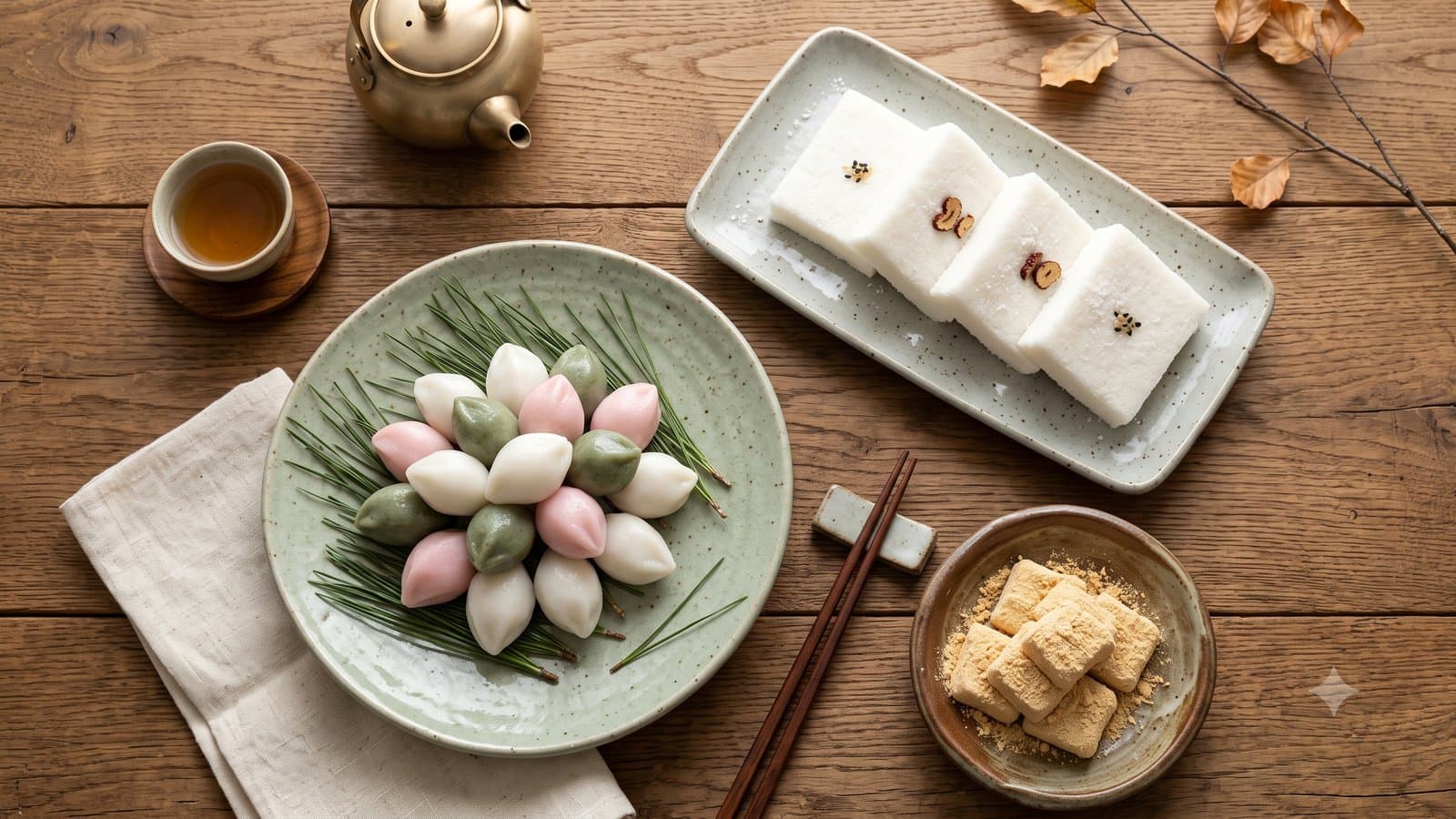
- Butter tteok (butter rice cakes) had a March moment that reportedly faded in under two weeks, replaced on feeds by heritage-style rice cakes and ube flavors.
- The churn itself became the story: Korean commentary in 2026 has turned notably critical of how fast these cycles burn out and how nakedly chains chase them.
The practical takeaway for a visitor: the viral item of the month will be stacked at the front of the store — that's your free trend report. Try it, but anchor the meal with the evergreen combos above; those are the ones Koreans actually come back to.
How to do it right
- Use the station. Hot water for ramen, microwave for everything else, and the window counter to eat at. All standard, all free to use with purchase.
- Timing is the vibe. After-school hours (3–6 p.m.) belong to students; midnight belongs to everyone else. Both are legitimate cultural experiences.
- Budget almost nothing. A filling combo runs a few thousand won. Look for 1+1 and 2+1 promotion tags on shelves — buy-one-get-one deals are a national sport and change monthly.
- Ice cup culture is its own genre: buy the cup of ice, then pour in whatever — coffee, tonic drinks, the Eolbaksa formula above. In summer, half the drinks leaving a GS25 are assembled, not bought.
Why this matters
Kkul-johap culture is what happens when a food-obsessed, price-sensitive, extremely online generation gets 24/7 access to modular ingredients. It's also a real window into Korean teen life — the convenience store is the after-school third place, and its recipes are folklore passed through short-form video instead of cookbooks. You can eat the whole phenomenon for about 6,000 won.
This article is independent editorial by Seoul Glow — no brand involvement. Trend items cited reflect Korean media and trend-tracker reporting as of mid-2026; the viral layer moves fast, so expect the front shelf to have moved on by the time you land.