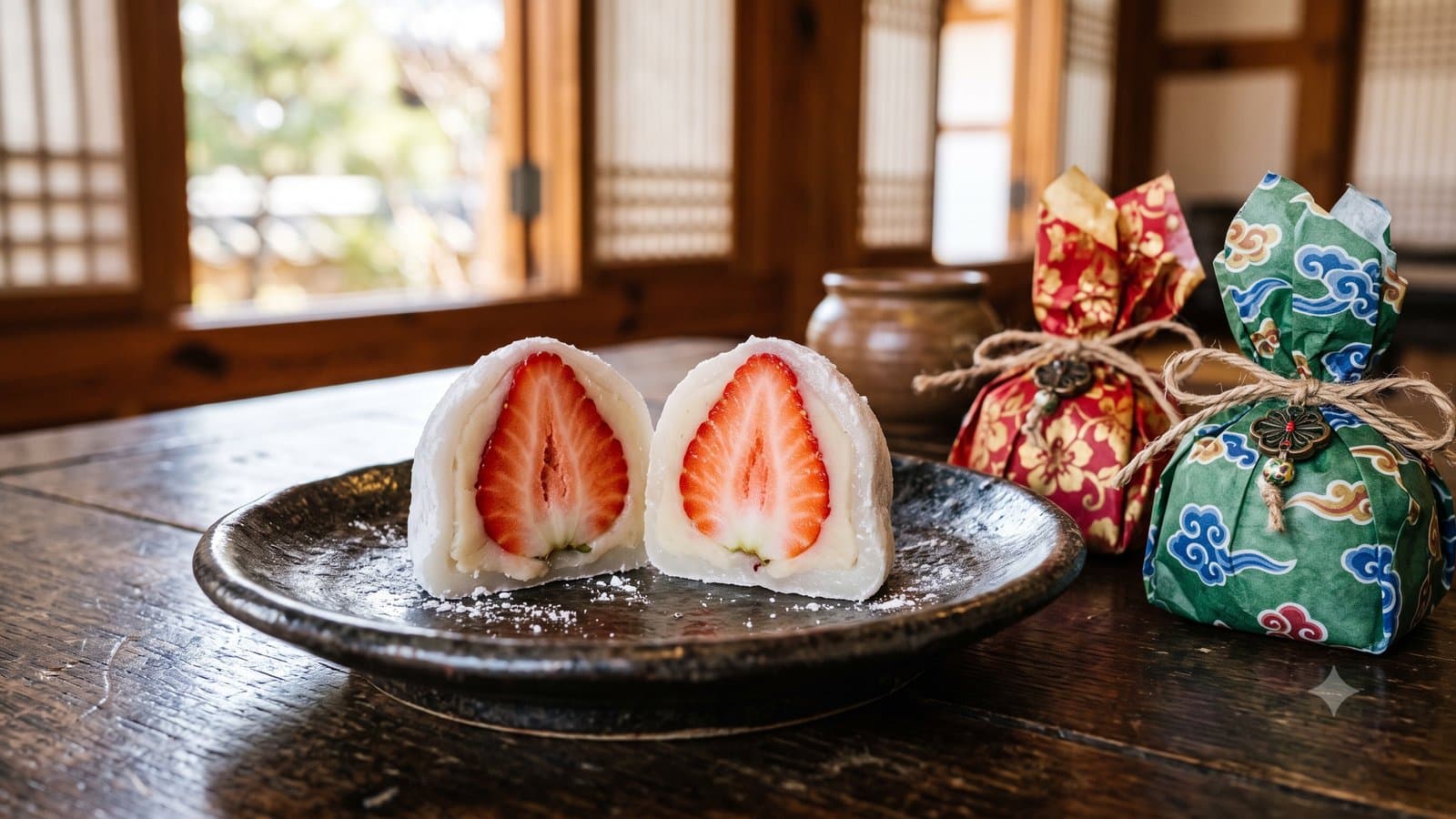
The hottest dessert queue in Seoul right now is not for a croissant or a Dubai-anything. It's for a chapssaltteok — a soft glutinous rice cake — sold one piece at a time, wrapped in colored hanji paper, for ₩7,500 apiece. The shop is called Hanjeongseon (한정선), the internet has nicknamed it "the Hermès of chapssaltteok," and the lines outside its hanok-styled stores have spawned a new word: tteok-jisullye — "rice cake pilgrimage."
Here's the brand, the craze, and the five-hundred-year-old tradition it's standing on.
The Hanjeongseon phenomenon
Hanjeongseon's pitch is simple: take Korea's traditional chapssaltteok and remake it as a contemporary dessert — whole fruit inside pillowy rice dough, presented like jewelry. Started as a Seongsu-dong shop, it rode SNS lines to a footprint that reads like a luxury brand's: Shinsegae Gangnam, The Hyundai Seoul, Hyundai Trade Center and Pangyo, Lotte's Myeongdong flagship, and Seoul Station. The stores are hanok-inspired; each rice cake comes individually wrapped in a different color of hanji (traditional paper), which is half the reason your feed is full of them.
The craze went fully mainstream this fall: when GS25 launched a collaboration yogurt chapssaltteok, it sold 100,000 units on day one — convenience-store validation being the modern Korean coronation. And notably, foreign visitors have adopted it as a must-eat, which is presumably why you're reading this.
Is a ₩7,500 rice cake worth it? The honest take: a good fruit chapssaltteok is a genuinely lovely thing — cool, tender, the fruit's acidity cutting the sweet bean — and Hanjeongseon's are beautifully made. You're also paying for hanji and hype, knowingly, the way one does. Weekday mornings beat weekend pilgrimages; the department-store counters often move faster than Seongsu.
What chapssaltteok actually is (and its secret job)
Chapssaltteok (찹쌀떡) — glutinous rice dough wrapped around a filling, classically sweet red bean — is Korea's cousin of mochi and one branch of the vast tteok family, and it's more than a snack: it's an amulet. The logic is beautifully literal: chapssaltteok is sticky, and in Korean, passing an exam is expressed as "sticking" (붙다). So before entrance exams, license tests, and interviews, Koreans gift chapssaltteok with one message: stick to it — pass.
The tradition peaks every November around the Suneung, Korea's college entrance exam, when bakeries fill with gift-boxed chapssaltteok and yeot (sticky taffy, same logic). If you know a Korean facing any kind of test, this is the culturally perfect gift — and part of why a chapssaltteok brand going luxury struck a chord: it turned everyone's good-luck food into something you'd actually be excited to receive. (The anti-gift is seaweed soup — slippery foods are exam-day taboo. Korea takes its food symbolism seriously.)
The bigger wave: grandma's table, re-plated
Hanjeongseon isn't an isolated hit — it's the sharpest case of the "halmaenial" trend (halmae = grandma + millennial): twentysomethings queueing for the sweets of their grandparents' era. Yakgwa — the honey cookie of Joseon ancestral rites — got its own craze first, complete with "yak-geting" (yakgwa ticketing) for famous shops' drops and export deals stocking it in Japan's Don Quijote and US Costco.
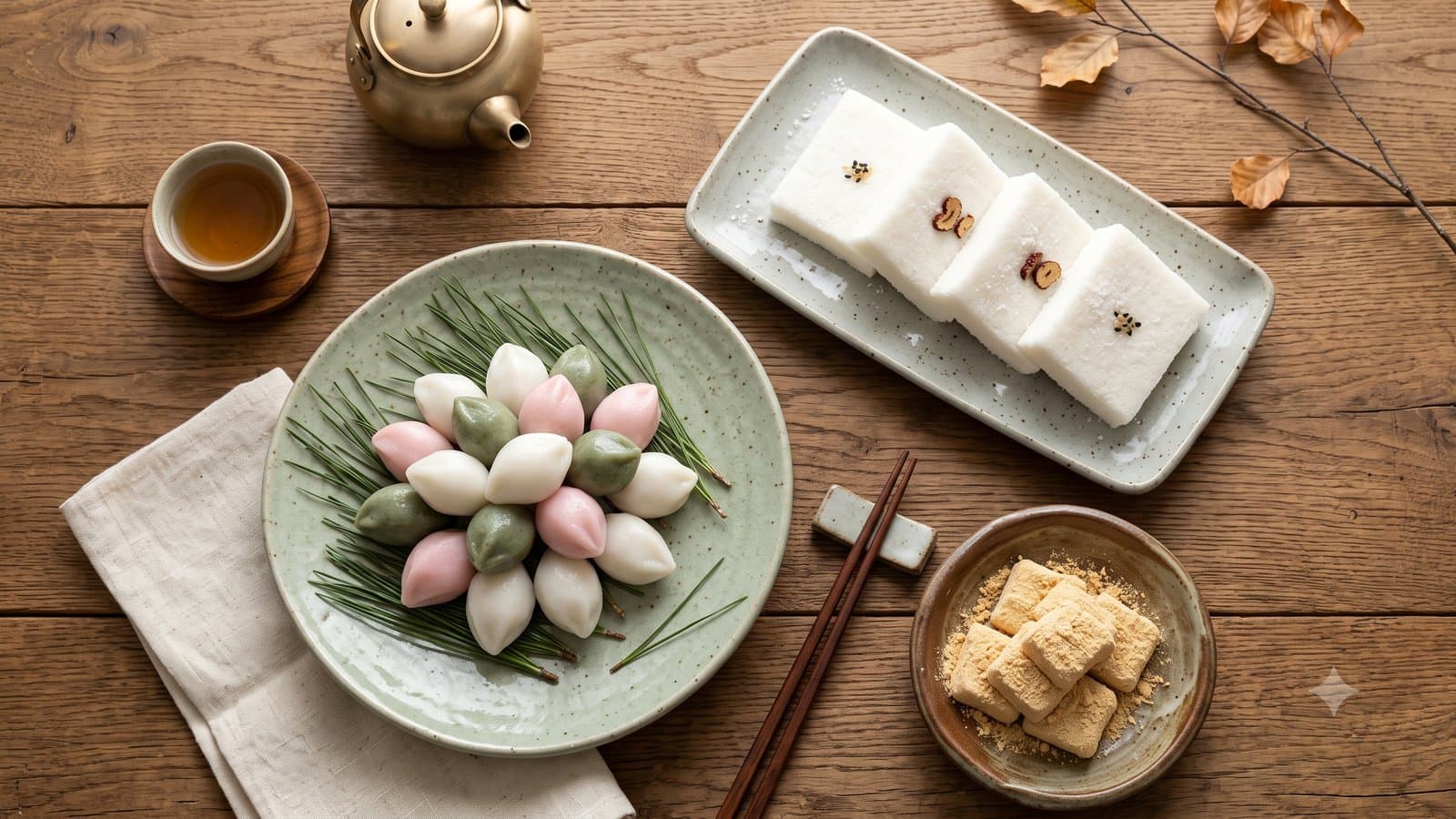
All of it stands on Korea's dagwa (다과) tradition — the tea-and-sweets table that was Joseon hospitality. The classic cast, still sold in Insadong and department food halls: yakgwa (honey cookie), yugwa/gangjeong (crackly fried rice puffs), dasik (molded tea-coins of sesame and pine pollen), yanggaeng (red-bean jelly), jeonggwa (candied roots and fruit). Hanjeongseon's genius was recognizing that this table just needed better lighting.
The visitor's chapssaltteok crawl
- Hanjeongseon — Seongsu original for the full hanok-and-hanji experience; The Hyundai Seoul or Lotte Myeongdong counters for shorter lines. One or two pieces; they're best within hours.
- Neighborhood rice-cake shops — the ₩1,500–2,500 classic version, fresh in the morning; Gwangjang Market and any local tteok-jip.
- Convenience stores — the GS25 collab and standard chilled chapssaltteok for pocket change (CVS food guide) — the honest way to calibrate what the fuss adds.
- Insadong — for the full traditional dagwa spread around your rice cake: hangwa boxes, dasik, and tea.
Brand details, prices, and trend reporting per cited sources as of September 2026 — queues and lineups change fast. Independent editorial: no affiliation with Hanjeongseon or GS25, and we paid for our own pilgrimage.