Every autumn, in the days before Chuseok — Korea's harvest holiday — kitchens across the country do something their great-grandmothers did: press small rounds of rice dough around sweet sesame filling, fold them into half-moons, and steam them over pine needles. The holiday's official food is songpyeon (송편), the prettiest member of Korea's vast rice-cake family.
That family is called tteok (떡), and it's far more than a snack: it's a calendar, a language of milestones, and — as of the last couple of years — the subject of a full-blown modern renaissance involving butter, cream, and, improbably, pepperoni.
Tteok as a life calendar
The fastest way to understand tteok is that Koreans don't just eat it — they mark time with it:
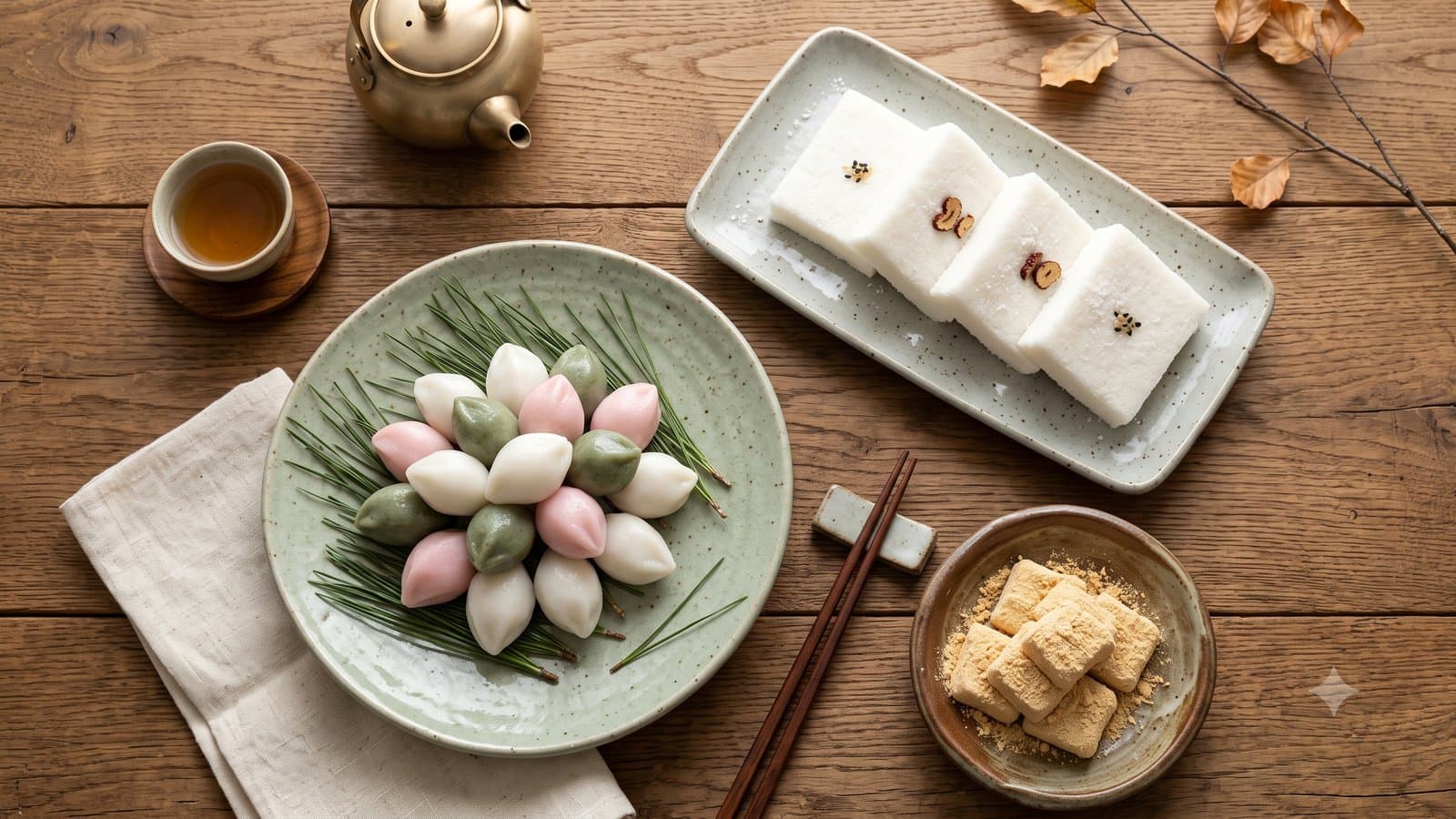
- 100 days old: a baby's baegil is celebrated with baekseolgi (백설기) — snow-white steamed rice cake, the white symbolizing purity; fluffy and cake-like rather than chewy.
- First birthday: the doljanchi table stacks a dozen kinds of tteok — white baekseolgi, red-bean-dusted susu-gyeongdan to ward off bad luck, and rainbow-striped mujigae-tteok for a future as bright as its layers.
- New Year: everyone eats tteokguk (떡국) — soup of coin-sliced garae-tteok — and thereby officially turns a year older; the white discs stand for a clean start and prosperity.
- Chuseok: songpyeon, steamed on pine needles (the song in the name means pine), with a folk belief attached: make pretty songpyeon and you'll have a pretty child — which is why every Korean family has a designated songpyeon perfectionist and several cheerful saboteurs.
- Moving day: the custom of sharing tteok with new neighbors is fading in apartment-era Seoul, but "moving-in tteok" remains the classic icebreaker — carbs as diplomacy.
Weddings, ancestral rites, business openings — ceremonial tables all have their assigned rice cakes. If something important is happening in Korea, tteok is present.
A field guide to the main varieties
"Rice cake" undersells the range — textures run from mochi-soft to pound-cake fluffy (the full list runs to hundreds). The ones to know:
- Injeolmi (인절미) — chewy squares rolled in roasted soybean powder; nutty, gentle, the gateway tteok.
- Garae-tteok (가래떡) — the long white cylinders; sliced for tteokguk, skewered and sauced as tteokbokki, or simply grilled with honey.
- Songpyeon — the Chuseok half-moons: rice dough around sesame-honey, sweet red bean, or chestnut, tinted with mugwort green or sweet-potato pink.
- Gyeongdan (경단) — boiled rice balls rolled in coatings: soybean, black sesame, coconut these days.
- Seolgi (설기) — the steamed, cake-crumb family; baekseolgi is the plain classic, and the modern scene builds wildly on it (see below).
- Yaksik (약식) — glutinous rice sweetened with honey and soy, studded with jujubes and chestnuts; the "medicinal" name reflects its royal-kitchen pedigree.
- Jeolpyeon (절편) — flat, stamped with patterns from wooden molds; the sculptural one.
Texture note for first-timers: fresh tteok is best the day it's made — it firms as it sits. Koreans revive day-old tteok with a quick steam or pan-toast, and freeze rather than refrigerate. Now you know more than most visitors.
The renaissance: butter tteok, pizza seolgi, and the tteok cafe
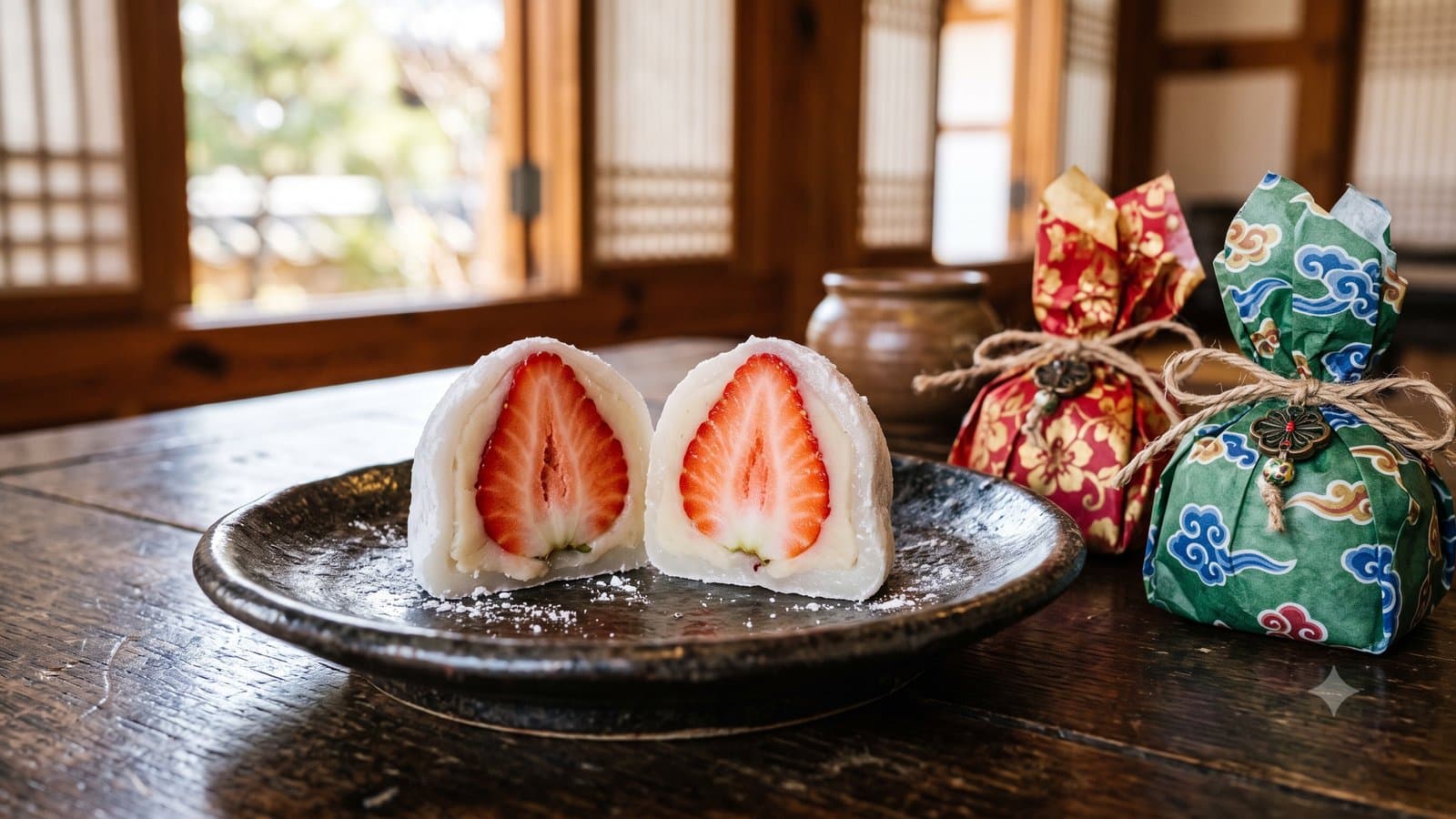
For a while, tteok had a reputation problem — the thing at grandma's house, losing shelf space to croissants. That has fully reversed. Korean media now tracks tteok's "modern makeover": makers are reinventing the classics with unexpected flavors and forms aimed squarely at younger palates — a pizza seolgi topped with tomato sauce, mozzarella and pepperoni went viral this year, and lines formed at Seoul's Myeonmok Market when a famous Busan tteok shop's creation arrived in the capital.
The recent hit parade, per that reporting: gaeseong juak — glossy fried rice-dough rings like tiny donuts, topped with fruit or cream — broke out in 2023, and butter tteok (버터떡) became one of this year's defining viral desserts. Meanwhile tteok cafes pair traditional rice cakes with espresso, and department-store food halls sell gift boxes that look like jewelry.
It helps that tteok fits the moment: naturally gluten-free, built from rice and beans and nuts, photogenic by design, and deeply Korean at a time when deeply Korean is the global brand. The same wave carrying gim and bakery pilgrimages is carrying tteok.
Where to try it as a visitor
- Traditional market tteok shops — Gwangjang and any neighborhood market have a tteok-jip selling fresh injeolmi and seolgi by the slab, cheapest and freshest at morning.
- Tteok cafes — the modern experience: gaeseong juak with coffee, butter tteok, seasonal songpyeon around Chuseok. Insadong and Bukchon have the tourist-friendly clusters; the viral shops rotate, so follow the lines.
- Department store food halls — premium gift-box tteok; the prettiest souvenirs, though tteok's short shelf life makes it a last-day purchase, not a suitcase stash.
- Convenience stores — packaged injeolmi and honey tteok for a ₩2,000 first taste (CVS food guide).
And if you're ever in Korea around Chuseok: accept every songpyeon offered. Refusing rice cakes at harvest is the one etiquette mistake our FAQ can't fix.
Holiday dates and trend reporting per cited sources as of September 2026. Independent editorial; our songpyeon are ugly and our children's beauty is therefore undetermined.