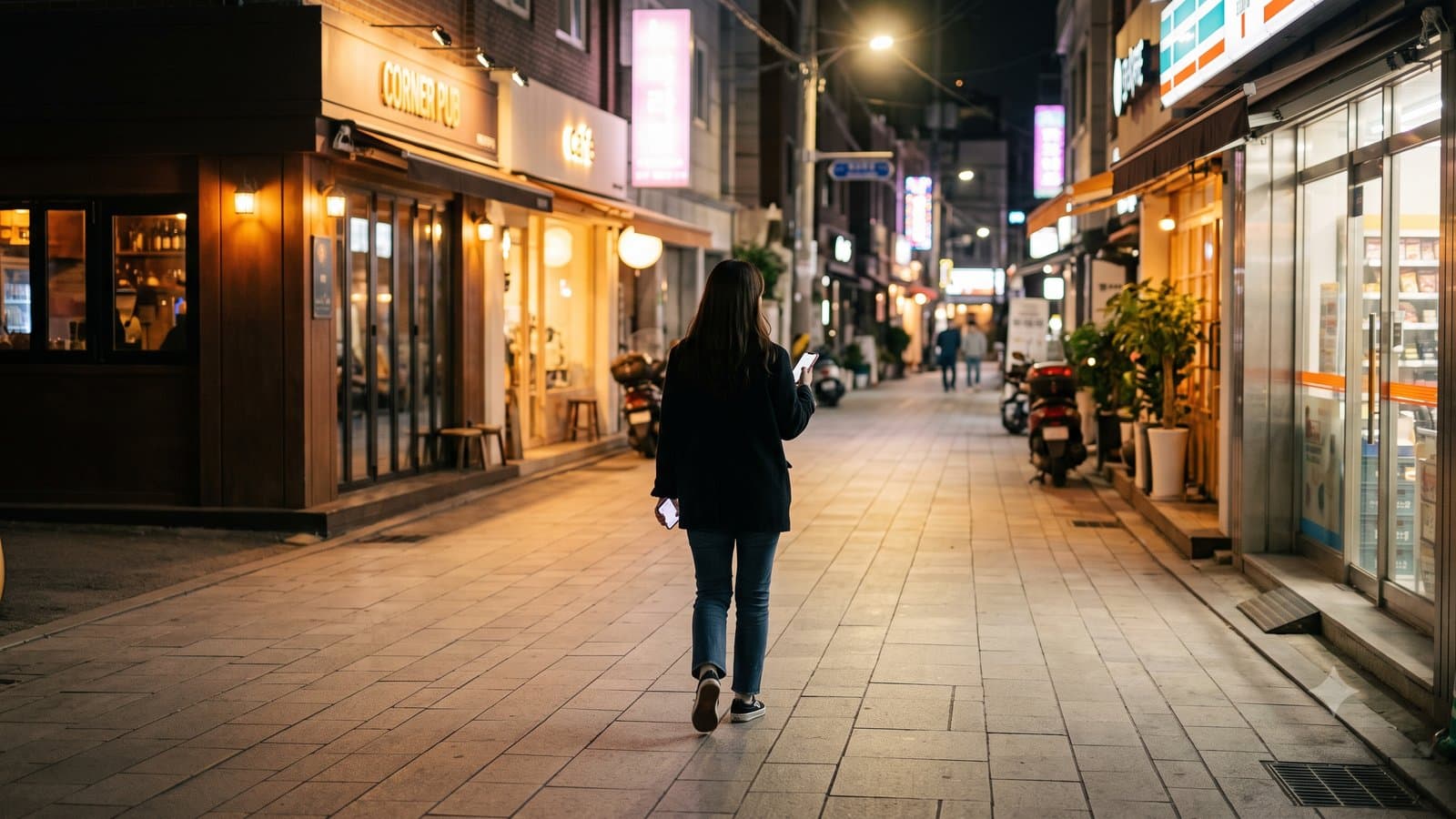
Type "is it rude to" into Google with "in Korea" and autocomplete finishes the sentence a dozen ways: tip, point, slurp, burp. Fair questions — Korean etiquette has real rules, but they're fewer and more forgiving than the internet suggests, and nobody expects a visitor to be perfect. Here are direct answers to the ones people actually search, in the spirit of a Korean friend briefing you over coffee.
Is it rude to tip in Korea?
No — don't tip. Korea has no tipping culture: not in restaurants, taxis, cafés, or hair salons. Prices are what you pay, service is included in the job, and staff may chase you down to return "forgotten" money. Nobody will be offended by the attempt, but you'll cause confusion rather than gratitude. The one loose exception is high-end hotel porters used to international guests — and even there it's optional.
Is it rude to slurp or eat loudly?
Slurping noodles is fine — in noodle restaurants it reads as enthusiasm, much like in Japan. Chewing loudly with an open mouth is another matter (rude roughly everywhere). Burping at the table is generally considered impolite, especially indoors and around elders, though standards relax at raucous barbecue-and-soju dinners.
What's the deal with chopsticks in rice?
The one food taboo worth memorizing: never plant your chopsticks upright in a bowl of rice. It mirrors the incense offering at ancestral memorial rites (jesa), so it visually references death at the dinner table. Rest them across the bowl or on the table instead. Related: Koreans generally don't lift rice bowls off the table while eating — another quiet difference from Japan or China.
Is it rude to point?
Pointing at things is fine. Pointing at people with one finger is impolite — gesture with an open hand instead. Related habit worth copying: beckon someone with your palm facing down, fingers waving toward you. Palm-up beckoning is for dogs.
Do I really need two hands?
This is the etiquette move with the best effort-to-impression ratio. Give and receive things — cash, cards, drinks, gifts — with two hands (or one hand supporting the opposite forearm), especially with anyone older or in a service setting. It signals respect instantly, and it's the habit visitors keep long after the trip.
How much do I need to bow?
Less than you think. A small nod with a smile covers nearly every tourist interaction — shops, restaurants, hotel desks. Deep bows are for formal occasions; nobody expects them from a visitor. Pair the nod with 안녕하세요 (annyeonghaseyo) and you're doing great.
Shoes: when do they come off?
At homes, always — no exceptions, no "my socks are embarrassing" negotiations. Also at temples, hanok stays, some traditional floor-seating restaurants, and jjimjilbang. The signal is a visible step up onto a raised floor plus a rack of other people's shoes. Street-level restaurants and cafés: shoes stay on.
Can you smoke (or vape) in Korea?
Smoking is banned in most public indoor spaces and many outdoor zones — look for designated smoking areas (흡연구역), often glass booths near stations. Vaping is treated like smoking under the rules, and fines apply either way. When in doubt, find the booth.
Why does everyone ask how old I am?
Because in Korean, age decides how people speak to each other — the polite-vs-casual speech levels we covered in our banmal vs. jondaemal guide. Asking your age (or your zodiac animal — the subtle version) isn't nosiness; it's grammar triage. And it comes with a twist: Korea historically ran on three different ages at once, until a 2023 law made international age the official standard. Socially, the old "Korean age" still floats around — so try the calculator above and know all three of yours before someone asks.
The honest take
Koreans grade visitors on a generous curve. Every rule above has been broken by every tourist ever, and the standard response is amusement, not offense. The two that actually matter: chopsticks out of the rice, shoes off at the door. Get those right, add two-handed giving and a nod, and you'll read as remarkably well-briefed. The rest is detail — and half the fun of a first trip is collecting the details yourself.
This article is independent editorial by Seoul Glow. Etiquette norms vary by setting and generation; rules and fines cited reflect common practice as of September 2026.