Ask anyone planning a first trip to Seoul what's on their food list, and Gwangjang Market almost always comes up. It's the city's most famous traditional market, a maze of sizzling griddles and steam under fluorescent lights — and thanks to a certain Netflix episode, it's now firmly on the global food-travel circuit. Here's the context, what's actually worth eating, and how to navigate it like someone who's been before.
A market older than most of modern Seoul
Gwangjang opened in 1905, which makes it widely cited as Korea's first permanent, daily market — earlier markets typically operated only on set days. It sits in Jongno, the old commercial heart of Seoul, and its founding is often framed as an act of economic self-determination: Korean merchants organizing their own marketplace at a moment when foreign interests dominated the city's trade, as the Soul of Seoul explains.
Today the market reportedly holds around 5,000 shops, and much of it still isn't about food at all — the upper floor is a working wholesale fabric market with hanbok and tailoring shops. But the ground-floor food alleys are what draw the crowds.
The classic three
The Seoul Metropolitan Government's own guide names the market's signature dishes: mung bean pancakes, mayak gimbap, and beef tartare. That's a good starter checklist:
- Bindaetteok (mung bean pancake). Ground mung beans fried in a shallow pool of oil until the edges shatter. This is Gwangjang's headline dish — you'll see vendors grinding beans in stone mills at the front of their stalls. Best eaten hot, ideally with a bowl of makgeolli (unfiltered rice wine).
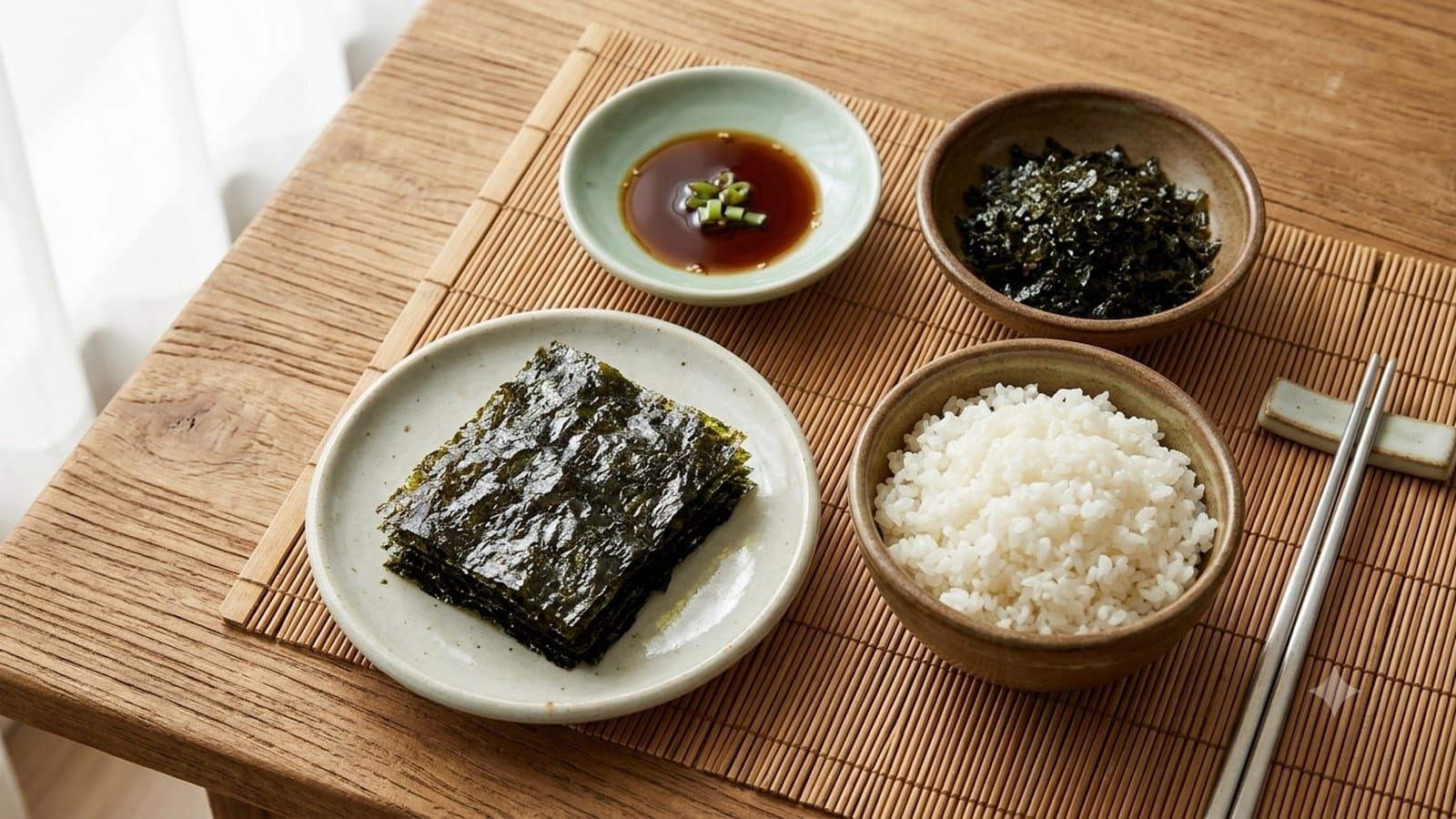
- Mayak gimbap. Bite-sized seaweed rice rolls whose nickname literally means "narcotic gimbap" — a joke about how hard they are to stop eating, not an ingredient list. They're minimalist (rice, carrot, spinach, pickled radish) and served with a mustard-soy dipping sauce that does the heavy lifting.
- Yukhoe (Korean beef tartare). A short alley of specialist restaurants serves raw seasoned beef, classically topped with an egg yolk and slivered pear. If raw beef gives you pause, these are sit-down restaurants with high turnover, which is exactly the context where you want to try it.
The Netflix effect
Gwangjang was already busy, but the 2019 Seoul episode of Netflix's Street Food: Asia changed its international profile. The episode centered on Cho Yonsoon, who has run the Gohyang Kalguksu stall — hand-cut wheat noodles in anchovy-vegetable broth — since 2007, after her family fell into debt. Her stall now has posters, a permanent queue, and pilgrimage status; reportedly it closes Mondays and sells out by early afternoon, so go early if she's your target (and check current hours before you plan around it — stall schedules change).
Honest take: the fame cuts both ways. The main food alleys at peak hours — weekend lunchtimes especially — are genuinely packed, and the most famous stalls draw long waits for dishes that near-identical neighboring stalls make very well too. Gwangjang is worth visiting, but it rewards people who treat the famous stalls as landmarks rather than the whole itinerary. Some of the best eating happens two rows over from wherever the cameras point.
How to do it well
- Go hungry, order small. Portions look snack-sized but add up fast. The right rhythm is one dish per stop across three or four stops, not a full meal at the first griddle you see.
- Timing matters more than stall choice. A weekday mid-morning or late-afternoon visit is a completely different experience from Saturday at 1 p.m. Many food stalls run from morning into the evening, but individual hours vary — this is a collection of independent vendors, not a food hall with posted hours.
- Bring cash, expect to share space. Cards are more widely accepted than they used to be, but small bills keep things smooth. Seating is communal benches; squeezing in next to strangers is the format, not a failure.
- Getting there is easy. The market is at 88 Changgyeonggung-ro in Jongno-gu, directly connected to Jongno 5-ga Station Exit 8 on Line 1. Euljiro 4-ga Station also works from the southern side.
- Look up. The fabric market upstairs is one of the more interesting free detours in central Seoul, and a reminder that Gwangjang is a working market first and an attraction second.
The bigger picture
Gwangjang's arc — neighborhood institution, then national icon, then global content — mirrors what's happened to Korean food culture as a whole over the past decade. The market has absorbed the attention without losing its function: ajummas still grind mung beans by hand, office workers still eat lunch at the noodle stalls, and the fabric merchants upstairs carry on as they have for generations. That layering is the real reason to go. The bindaetteok is just a very good excuse.
This article is independent editorial by Seoul Glow. Details like stall hours and prices change often — check current information before visiting.