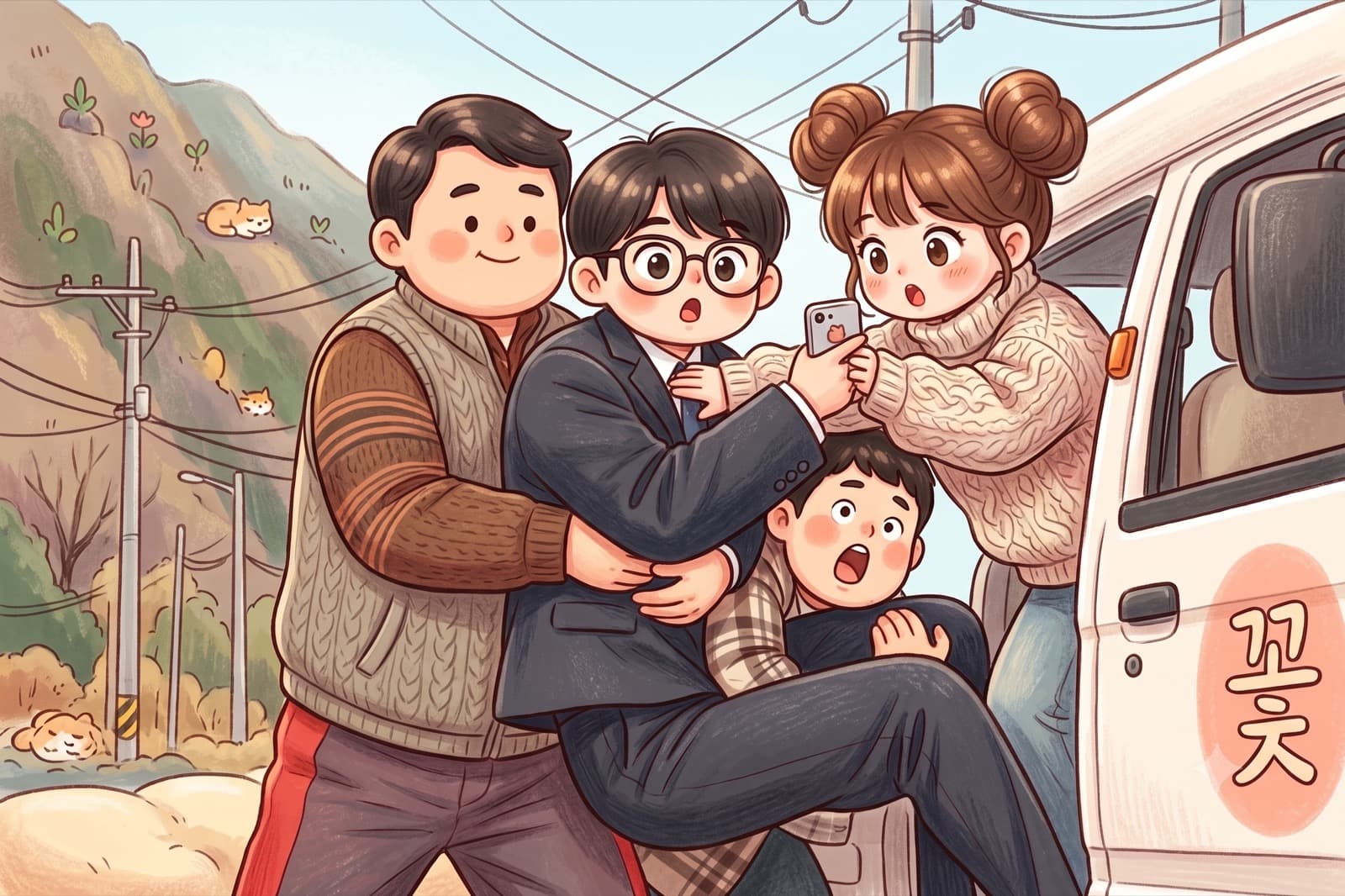
Superhero fatigue is real everywhere — except, apparently, in a fictional Korean city in December 1999. The WONDERfools (원더풀스), Netflix's eight-episode Korean series released this May, takes the most exhausted genre on television and does the most K-drama thing possible to it: shrinks it down to a neighborhood, slows it to a human pace, and cares more about its misfits than its explosions.
If you've been waiting for a hero show that feels like a warm meal instead of a franchise obligation — or you just miss the specific silliness of the late '90s — this is the one to queue up.
The premise
It's the final days of 1999. The world is bracing for Y2K, doomsday rumors are thriving, and in the fictional city of Haeseong, strange supernatural phenomena start clustering. Through an unexpected event, a handful of the neighborhood's least impressive residents — the local screw-ups, the overlooked, the perpetually unlucky — wake up with superpowers, and stumble into defending their city against a villain who threatens its fragile peace.
That's the setup, and the show's charm is exactly in the gap it exploits: these are not chosen ones. The Korean title's pun says it all — WONDER-fools. Powers land on people who still have rent, family drama, and neighborhood reputations to manage, and the show mines that collision for both comedy and a surprising amount of tenderness.
Why the pedigree matters
Three names explain the show's DNA:
- Yu In-sik and Park Eun-bin, reunited. The director-actor pair behind Extraordinary Attorney Woo — the 2022 series that became a global Netflix phenomenon on pure warmth — are back together, and it shows in the register: humane, funny, allergic to cynicism.
- Kang Eun-kyung's writing team. The creative group led by the Dr. Romantic series writer handles the scripts — Korean TV's specialists in ensemble workplaces where competence and kindness coexist.
- POW! Entertainment. The company founded by the late Stan Lee participated in the project's planning and development — a genuinely rare case of Marvel's founding sensibility (ordinary people, neighborhood stakes, powers as personal burden) routed through a fully Korean production.
Add a cast that runs from Park Eun-bin and Cha Eun-woo to veteran heavyweights like Kim Hae-sook and Son Hyun-joo, and you get the K-drama formula applied to capes: stack the ensemble, ground the stakes, let charisma do the special effects' job.
The Y2K of it all
For Korean viewers, the 1999 setting is a nostalgia engine — PC-bang-era technology, millennium-eve anxiety, the texture of a Korea just before broadband and smartphones rewired everything. For international viewers it doubles as a time capsule: this is the Korea that existed right before the Korean Wave began exporting itself, rendered with the affection of people who grew up in it.
The period setting also does quiet genre work. Without smartphones, social media, or CCTV saturation, superpowers stay local — rumors instead of viral videos, neighborhood witnesses instead of news choppers. It's the structural trick that keeps the show small and warm where modern-day hero stories sprawl.
Where it sits in the K-hero landscape
Korean TV has been quietly building its own superhero grammar for years — most visibly with Moving, the 2023 Disney+ hit that treated powers as something parents sacrifice to hide, not flaunt. The WONDERfools extends that tradition in a lighter key: Korean hero stories consistently choose family, neighborhood, and the cost of being extraordinary over city-leveling spectacle. If Hollywood's question is "who saves the world?", the K-hero question is closer to "who picks up the kids while you're saving the block?"
That's also the honest expectation-setting: if you want large-scale action set pieces, this isn't built for that. The action is functional; the comedy and ensemble are the point. "Gentle hero show" is a description, not a criticism — but know which show you're sitting down to.
Before you press play
- Length: 8 episodes — a weekend-sized commitment, increasingly the Netflix K-drama standard.
- Tone check: closer to Extraordinary Attorney Woo meets a superhero origin story than to anything Marvel currently makes.
- Subtitle tip: the late-'90s Korean cultural references fly fast; Netflix's English subs handle them serviceably, but the show rewards viewers who've absorbed a little Korean context — the neighborhood dynamics will feel familiar if you've read our pieces on Korean community culture.
- If you like it: Moving (Disney+) for the dramatic end of Korean hero stories, and Extraordinary Attorney Woo for this exact creative team at full power.
This article is independent editorial by Seoul Glow. Series details reflect Netflix's release information and Korean media reporting; premise description avoids spoilers beyond the setup.