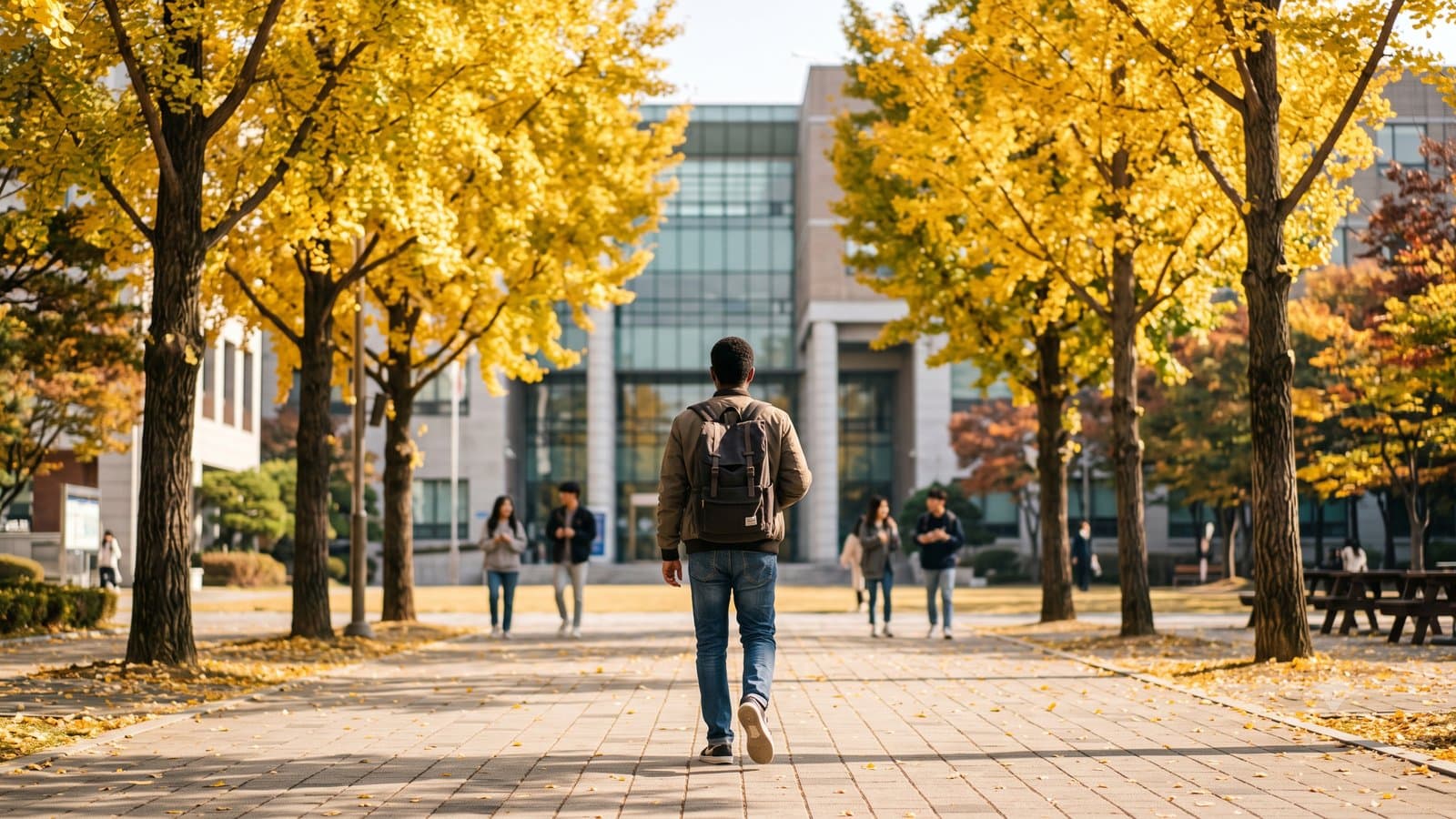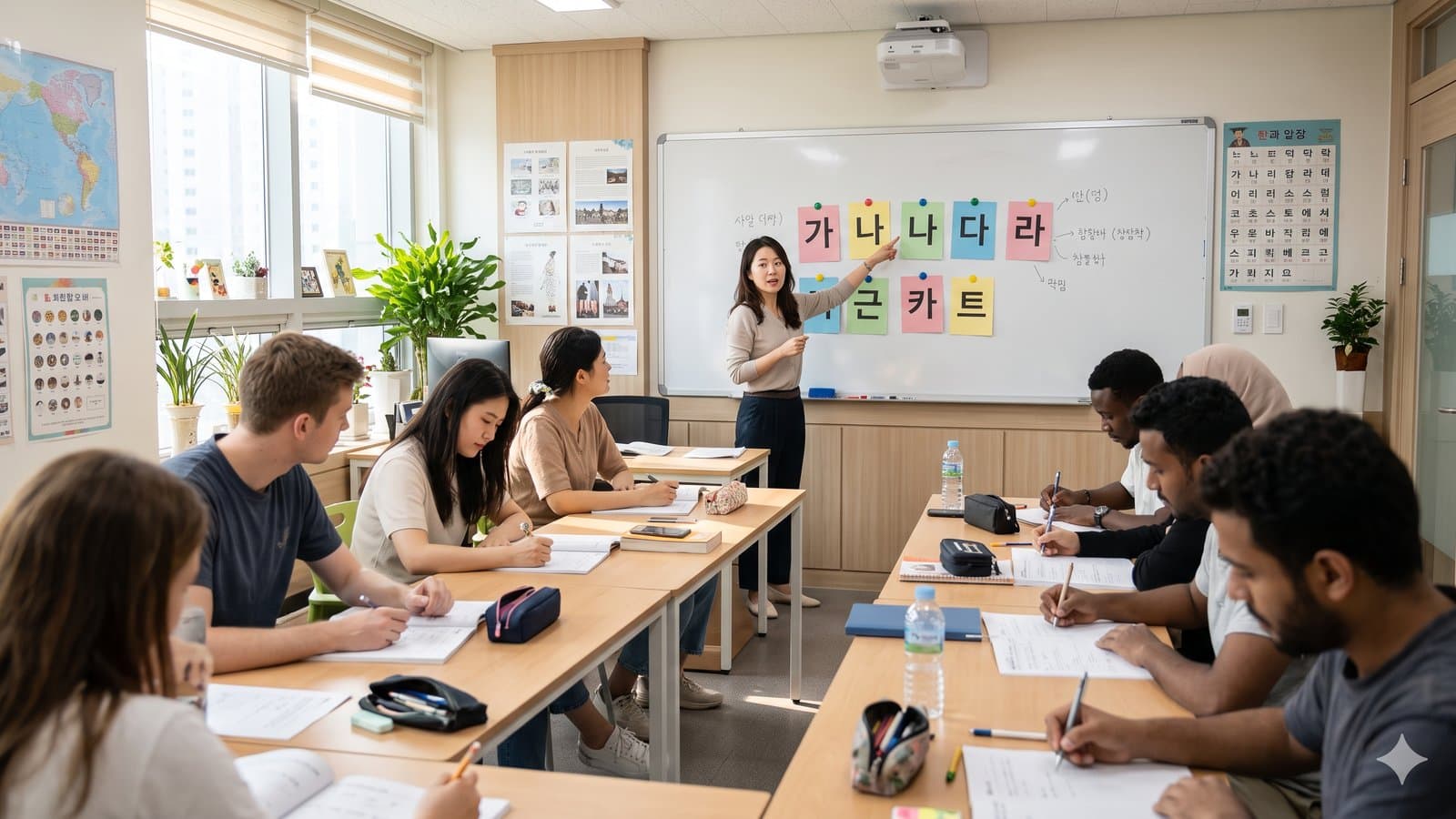
The most common first chapter of a "how I moved to Korea" story isn't a university degree or a job — it's a university language institute: the 어학당 (eohakdang), where you study Korean four hours a morning alongside classmates from everywhere. The route is well-trodden and genuinely open to anyone — but the paperwork has a strict order, and knowing it four months early is the whole game.
Here's the preparation process, step by step. (Deciding between this and exchange/degree routes? Our official-sources study guide maps the territory.)
How the system works
- The format: university-affiliated institutes (Yonsei, Seoul National, Korea University, Sogang, Ewha, and dozens more nationwide) run four 10-week terms a year — spring, summer, fall, winter — with levels 1 through 6, placement-tested. Four hours of class daily is standard.
- The cost: roughly ₩1.7–1.9 million per 10-week term at major Seoul institutes (Yonsei's 2026 rate is about ₩1.86 million); regional universities run cheaper. Budget housing separately — goshiwon, dorms, or shares.
- The visa: studying one term on a tourist stay is possible for many nationalities, but the real path — multiple terms — runs on the D-4 language-training visa, and you cannot apply for a D-4 without an admission letter from the institute. That single dependency sets the whole timeline.
The prep timeline
T-minus 4 months — choose your school. Seoul's big-name institutes (Yonsei KLI, SNU, Korea, Sogang — famous for speaking-focused teaching) fill early and cost most; regional universities offer smaller classes and lower rent. Check each institute's site for term dates and application deadlines — typically 2–3 months before term start.
T-minus 3 months — apply and pay. Applications are online: passport scan, photo, application fee, a short study plan, and — the step that surprises people — financial proof. Schools commonly ask for a bank balance certificate in the ₩8–10 million range (for example, Korea University's language center asks for ₩10 million; requirements vary by school and region, so follow your institute's number). Many schools require a term or two of tuition paid upfront before issuing the admission letter.
T-minus 2 months — admission letter → D-4 application. With the admission letter in hand, apply for the D-4 at your local Korean embassy or consulate (requirements and processing times vary by country — your embassy's checklist outranks every blog, ours included). Processing typically takes a few weeks.
T-minus 1 month — logistics. Book housing (institutes list dorm options and nearby goshiwon), flights, and travel insurance. Start Korean now, not on day one: the free official online courses plus our Hangul-in-a-weekend guide, tracing game, and typing game mean you can arrive reading — placement-testing out of the true-beginner level saves a whole term's tuition.
Arrival — the first two weeks. Placement test, orientation, and (for stays over 90 days) your residence card application through immigration/HiKorea. Get a Korean SIM and bank account early — both get easier once the residence card exists.
The rules that actually matter once you're in
- Attendance is enforced. Institutes report attendance to immigration, and low attendance jeopardizes visa extensions — guides recommend staying well above the minimum. Treat it like the condition of your stay, because it is.
- Part-time work is possible, with rules: generally after six months in Korea, with prior permission and basic Korean proficiency — permission first, job second, never the reverse.
- The ladder continues: many students run the classic progression — language institute → TOPIK level 3–4 → degree admission or GKS application. The institute year doubles as a university audition.
Budget reality check
A sane per-term budget in Seoul: tuition ~₩1.8M + housing ₩1.5–2.5M (10 weeks, goshiwon-to-share range) + living ~₩1.5M — call it ₩5–6 million per term all-in, less outside Seoul. The good news: daily life in Korea is kind to students — convenience-store dinners, ₩1,400 subways, and free entertainment keep the living line manageable.
Figures reflect cited sources as of October 2026 and vary by school, nationality, and year — your institute's website and your Korean embassy's checklist are the authorities. This is general information, not visa or legal advice.