Ask a Korean adult about ireum gunghap (이름 궁합) — "name compatibility" — and watch their face do the thing: the involuntary smile of someone transported back to a classroom desk, hiding a notebook from the teacher, counting pencil strokes to find out whether they were destined to marry their crush.
It's one of Korea's most universal childhood memories, it requires exactly one pencil, and we've built a version you can play right now with any names — Korean, English, or both.
How the game works
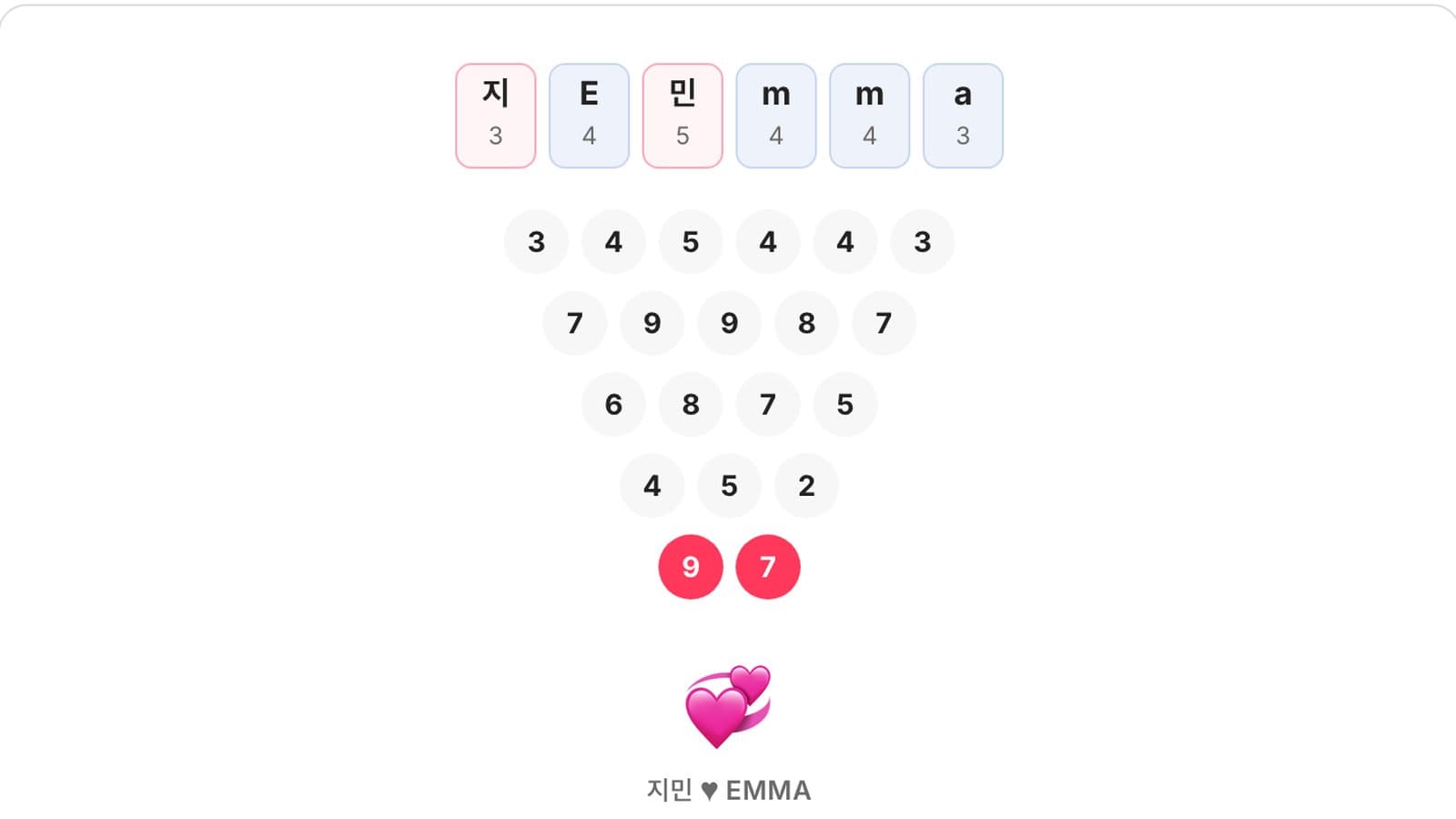
The mechanics are beautifully simple, which is why they survived generations of playgrounds with no help from technology:
- Write two names, interleaving the characters — first character of one name, first of the other, and so on, usually with a heart drawn between them (the heart is structurally essential).
- Count the strokes of each character and write the number underneath. For Hangul that means counting the strokes of the letters in each syllable block; every Korean kid can do this on sight.
- Add adjacent numbers in a pyramid, keeping only the last digit each time — 7+8 becomes 5, not 15 — so each row is one number shorter.
- When two digits remain, that's your score: 73 means 73% compatible. Screaming optional but customary.
The rules have regional dialects — some versions count strokes differently, some interleave differently — and arguing about whose counting is correct is, honestly, part of the game. Ours uses standard print-form stroke counts and states them openly, in the spirit of settling classroom disputes.
Why a stroke-counting game says something about Korea
Ireum gunghap sits at the intersection of two very Korean cultural currents. The first is the country's long, affectionate relationship with name-based fortune reading: in traditional practice, parents consult specialists on a baby's name partly for its meaning and balance — a custom we cover in our guide to how Korean names work — so the idea that names carry fate was already in the cultural groundwater. The schoolyard game is that big idea, miniaturized into recess-sized entertainment.
The second is the national fondness for typing and matching systems as social play — the same instinct that powers MBTI small talk, teto-egen sorting, and saju readings. Ireum gunghap is arguably the ancestor of all of it: a fast, shareable verdict on human chemistry, generations before the internet made that a genre.
And nobody — this bears repeating — has ever believed it. That's the charm. The game's entire emotional payload lives in the three seconds before the final digit appears.
The K-pop fandom revival
The game never really died, but it found a spectacular second life in fandom culture: fans running their name against their bias's name is a perennial social media pastime, complete with appeals ("I used their real name instead of their stage name and got 91%, so"). Since stage names, birth names, and romanized spellings all give different scores, a sufficiently motivated fan has options — which is exactly how the playground intended it.
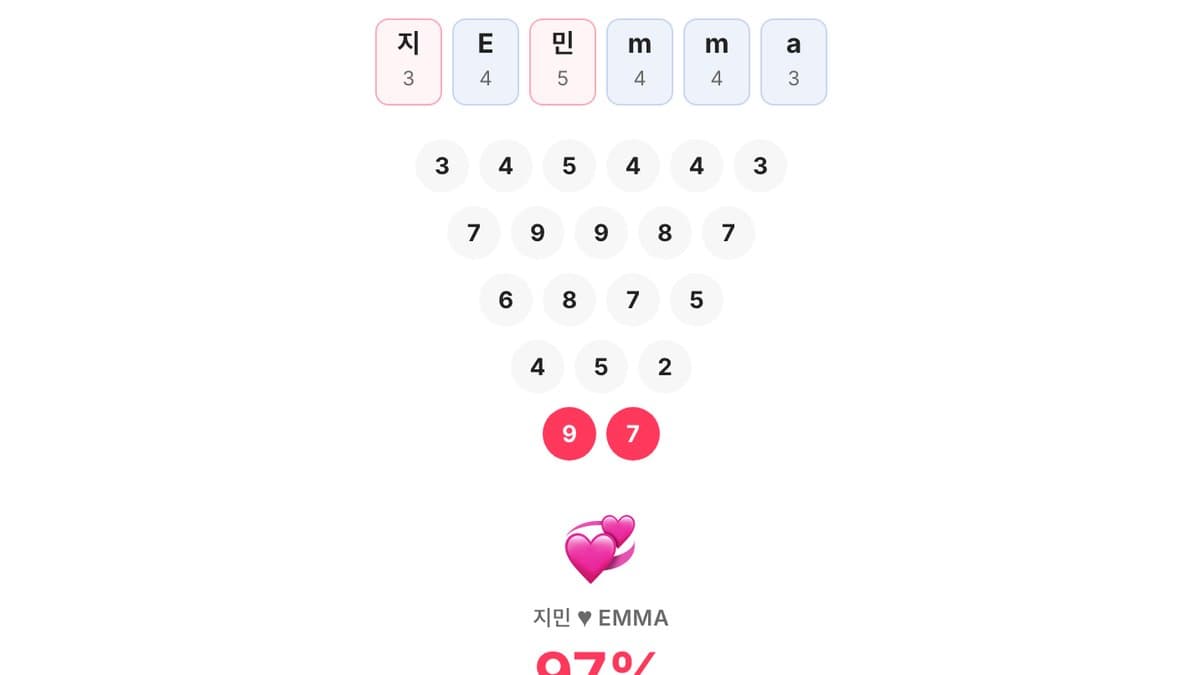
Our version leans into this: it takes Korean and English letters in the same name, so 지민 ♥ Emma is a perfectly legal matchup, and every result comes with a share link that replays the pyramid for whoever opens it. (First names only is the classic format — and yes, swapping the name order changes the result. Tradition says you keep whichever score you like better.)
Play it properly
For the full experience, do it the schoolyard way: don't test one pair — test everyone. Your name against your crush, your best friend, your group chat, your cat. The game was never really about romance; it was about a table of kids laughing at a 23% and demanding a recount. Some technologies peak early.
Ireum gunghap is a children's game, not fortune telling — no version of it, ours included, measures anything real. Stroke counts follow standard print forms; regional playground rules vary and are all equally official.