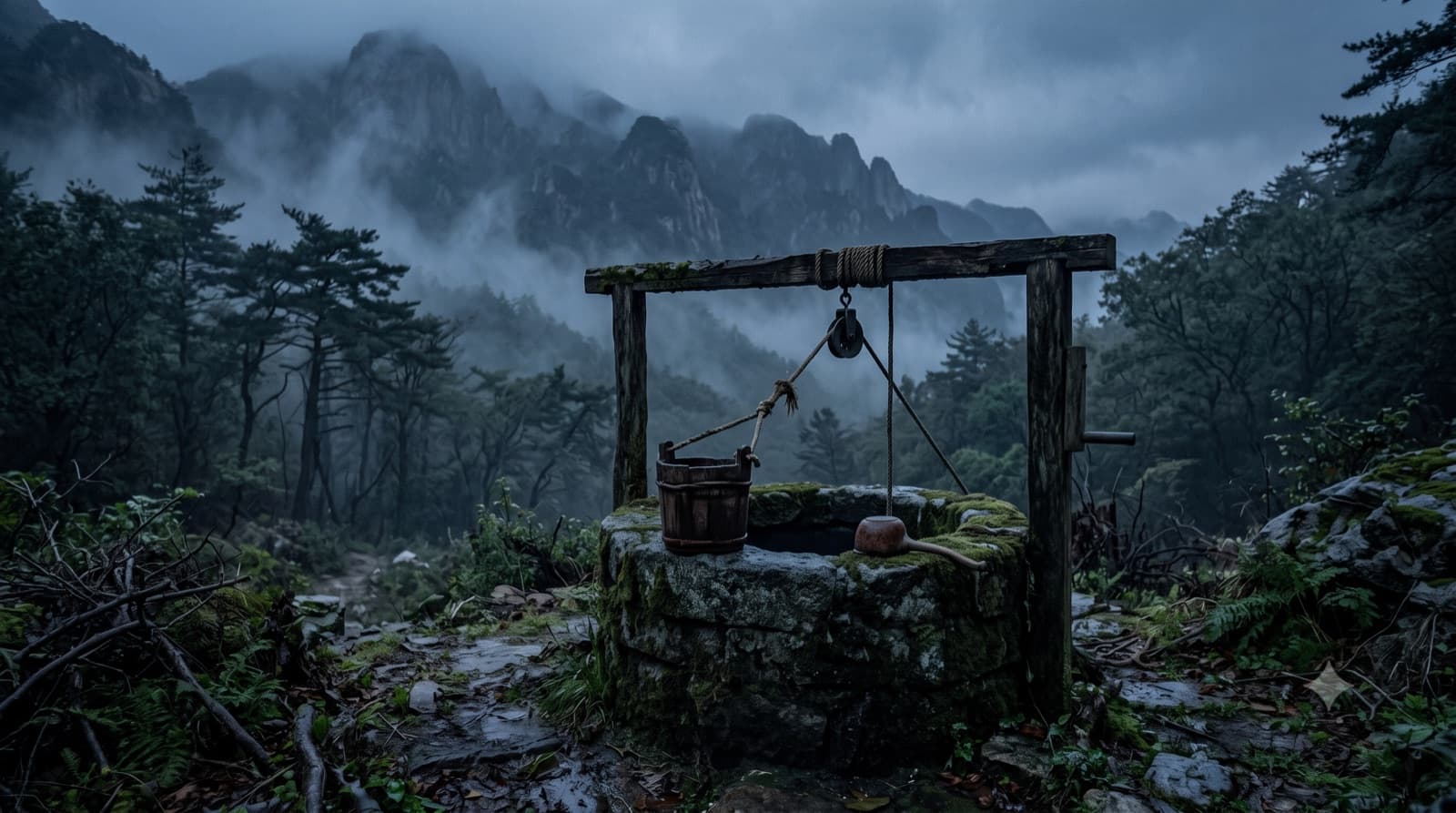
Korean horror has a reputation among genre fans: it rarely goes for the cheap jump scare. Instead it builds dread out of things that are already heavy in Korean life — academic pressure, cramped apartment living, family duty, and a shamanic spiritual world that never fully went away (we've written about that living folklore in our jeoseung saja deep dive).
If you've been curious where to start, 2026 is a good year to jump in. Here's a guide, from this year's breakout hit to the essentials.
Start here: If Wishes Could Kill (기리고) — Netflix, 2026
Netflix's first Korean young-adult horror series, released April 24, became this year's word-of-mouth K-horror hit and climbed to the top of Netflix's global non-English charts.
The premise is elegantly cruel: students at Seorin High School discover Girigo, a mysterious app that grants wishes — then starts a red 24-hour countdown, and the omens begin pointing at who pays for each wish. Five students dig into what the app actually is, while the body count of granted wishes grows.
Reviewers consistently point to the same strength: it's less about the supernatural mechanics and more about how precisely the premise aims at the pressures of Korean teenage life, where a wish about grades or a crush doesn't feel trivial at all (Heaven of Horror's review). Season one runs eight episodes.
The brand-new one: The East Palace (동궁) — Netflix, July 2026
If you want something just released: The East Palace premiered July 17 as a Joseon-era dark fantasy about a cursed royal palace. After a pond spirit claims a crown prince, the king recruits Gu-cheon — a ghost-slayer who can turn himself into a ghost — played by Nam Joo-hyuk (yes, the same actor cited as a visual model for Jinu in KPop Demon Hunters), alongside Cho Seung-woo and Roh Yoon-seo.
The pedigree matters here: it's written by Kwon So-ra and Seo Jae-won, the team behind The Guest (below), and again built on Korean shamanist tradition — this time in the era when shamans held real influence over royalty (The Korea Herald). Early reviews have been warm, with RogerEbert.com suggesting it will "scratch the Stranger Things itch." More ghost-slaying fantasy than pure horror — a good pick if you want the folklore and atmosphere without losing sleep.
Then pick your flavor
Kingdom — Netflix. The one that made "zombie sageuk" a genre. A crown prince investigates a mysterious plague resurrecting the dead in Joseon-era Korea, and the political scheming is as lethal as the infected. If you liked the gat hats in KPop Demon Hunters, this is where much of the world first saw them.
Sweet Home — Netflix. A grieving teenager moves into a run-down apartment tower just as humanity starts turning into monsters — each one shaped by the person's inner desire. Korean horror loves the apartment complex as a setting, and this is the definitive example: the neighbors are the story.
The Guest (손 the guest) — OCN (available on international streamers by region). A psychic, a Catholic priest, and a detective hunt a possessing demon — from the same writing team behind The East Palace above. It's the best on-screen introduction to Korean shamanism — the rituals here connect directly to the musok tradition we covered in our shamanism and saju explainer. Widely considered one of the scariest K-dramas ever made.
Happiness — available by region. A high-rise is sealed off during an outbreak that turns residents violent. By reputation it's less about the infected and more about what the healthy do to each other — a very Korean take on class and apartment hierarchy that fans often recommend to people who "don't like horror."
Goedam — Netflix. An anthology of urban legends in episodes under 10 minutes: elevator ghosts, school hauntings, late-night taxis. Zero commitment, maximum atmosphere — ideal as a sampler before you commit to a full series.
Why K-horror feels different
Three threads run through almost everything above:
- The horror is social. Exams, rent, hierarchy, reputation — the monster is usually a metaphor with a very specific Korean address.
- Shamanism is treated as real. Where Western horror reaches for the occult as something exotic, Korean stories draw on musok practices that are still part of living culture — which is why the rituals on screen feel researched rather than invented.
- Endings don't always comfort you. K-horror is comfortable leaving the wound open. Don't expect the last episode to tuck you in.
A practical note on availability: Netflix titles above are global; others (like The Guest and Happiness) move between services depending on your country, so check your local streamer. And if subtitled horror is new to you — the scares survive translation just fine. It's the dread that's fluent.
This article is independent editorial, curated from critical reception, streaming charts, and official materials linked above. Availability varies by region and changes over time — check each platform for current listings.